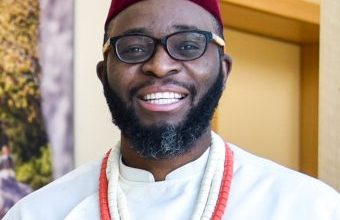

Former Managing Director and Chief Executive Officer of the defunct Manny Bank Plc, Dr. Jonah Ezikpe, has highlighted what the President-elect Bola Ahmed Tinubu should do to return the economy of Nigeria on its feet.
In this Interview, the foremost economic lecturer, urged Tinubu to decentralise economic activities in Nigeria.
In the next one month, the new government of Bola Ahmed Tinubu will be in place. What should be his economic thrust?
Before I go straight to your question, let me tell you my encounter with Tinubu. I met him when he was elected Lagos State governor. Tinubu and the late Senator Onyeka Okoroafor were both in the Senate of the short lived Third Republic and they had challenges with Abacha. Onyeka and Tinubu were in the Alliance for Democracy (AD) and I was the managing director of Manny Bank. Onyeka told me to join him to pay a courtesy call to the Lagos State governor-elect. We went there with one Dr. Leo Ogba of defunct Citizen Bank. After exchanging pleasantries, and in the process, Yomi Cadeso’s name was mentioned. He was in Citizen Bank then. Tinubu turned to Dr. Ogba, and asked him ‘so, Yomi works with you, tell him to get in touch with him.’ Yomi did and that was how he became a commissioner in Lagos State. That was my first encounter with him. I wish him all the best as he mounts the saddle.
Having lived in Lagos State, I have also watched him in terms of his economic programmes, which he later handed over to Fashola. Some of the things he did gave me a good impression that he is going to make a good president just like he made a good governor in Lagos. I’m not a politician. This is just a personal opinion.
As a president, challenges at the federal level are not same as the local level. You are now looking at multi ethnic groups. Any economic policy that he is going to come up with, there must be first of all security. People have to be secured first before you talk about economic programmes. So, he should first address security issue. Once that is addressed or a plan is on for it, he can now look at the economic programme for the nation, which is primarily: How do we generate more money than we spend? Right now, we are spending more money than we are generating. On top of it, most of the monies are borrowings, which carry high interest rates and also other conditions.
Another thing he has to look at is how to increase revenue. How do you do that? Oil is the major source of income in Nigeria, but from evidence before us, we are told that oil is being stolen such that the income from oil in terms of foreign reserve is not even enough. To make a good president, he has to kick some bucks. He should work to leave a legacy. The security of people should be uppermost. Igbo feel threatened in Lagos and Igbo are helping to drive the economy in Lagos and in Nigeria, just as the Yoruba are the leaders in the entertainment industry in Nigeria. Each region has its own comparative advantage, he should identify these areas and give them that support. So, safety of individuals, unity of Nigeria and then he comes to how to generate more money than the country spends and also the issue of the debt that has accumulated.
He is going to inherit a high debt burden. Security, as you have identified gulps money. How would he go about it?
Even though he is from the party with the outgoing president; he has to look at the debt profile and its derivation because those loans were taken for specific purposes. For instance, we were told that most of the loans from China were taken for the renovation of the railway industry. From what I read in the papers, the income from the railway is not even enough to service the interest from the debt, not to talk about the principal.
We cannot continue that way, you have to concession it. If you don’t service that debt, it will continue to accumulate. Now you are turned to a beggar, you go to your lender to ask to reschedule the loan or debt cancellation, which Nigeria had got before during Obasanjo’s regime through Dr. Ngozi Okonji-Iweala. The fact that you are owing doesn’t mean that people will starve. You have to find a way of generating income. Reduce the debt burden, restructure the debt, increase its tenure, the term and other restructuring, but look at where to generate money. Right now, it is the oil and the non oil sector like agriculture, that the country generates money. He should look at the tax system. I don’t know why someone will fly a personal jet and when you look at his personal income tax contribution, it is not enough. The same thing he did in Lagos, he should replicate it by restructuring the revenue service. Another area is to look at the import bill and all those leakages in the system, and get rid of the fuel subsidy and fight corruption and in doing that you have to live by example.
If subsidy is removed, will it not impact negatively on the lives of the poor people you are claiming to protect?
I believe in the operation of the market system as against state control or allocation. I believe that the market will allocate resources better even if it doesn’t in the short run, but in the long run, it will get it. The existing subsidy system creates huge corruption in the system, whereby few individuals will get fat, while the masses will be impoverished.
It is like postponing the doomsday by arguing that if you remove the subsidy that the poor would be worse off. Let it be that we have a well structured safety net. Whether $800 million is enough or not, we have to do the calculation, but to say that if you remove subsidy a lot of people are going to suffer because transport cost will go up, housing will go up, etc, and for that you allow it to continue will not help. We have been having those reasons. Under the Structural Adjustment Programme, Babangida closed his eyes and did a lot of things. The country is bleeding; the first thing to stop the bleeding is by removing the subsidy which goes into individual pockets. I support subsidy removal because the market will perform better than allocation or state control. It is not just going to borrow $800 million, overtime; you look at how people are responding to the removal and continue adjusting.
How should the new administration handle the monetary policy and exchange rate?
When it comes to monetary policy, it is left with the CBN. It is the fiscal policy angle that the government is to address, but they have to synchronise both the monetary and the fiscal policy for them to work. What are the issues when you talk of monetary policy – interest rate, exchange rate policy and inflation? Because the Nigeria economy is highly import dependent, exchange rate policy becomes more significant than interest rate policy; that is the availability of credit becomes more important to a businessman in Nigeria than the cost of credit. If you have a good project, banks may refuse to lend to you, but over there, like in the US, funds are easily available, interest rate become a critical factor of monetary policy. Here, because of the high dependence of our economy on foreign sector, exchange rate policy becomes significant.
How do we get the exchange rate to come down, which at any point in time reflects both what you can produce and sell to the other counterparty? So, when we cannot produce anything to sell to the counterparty, you are at his mercy and he calls the shots and that is exactly what is happening to us. Weak capital formation, low productive base, low manufacturing base are the issues we have.
Exchange rate will continue to be high, especially, if it is to depend on an internally generated source of economic activities, because mere selling oil is not enough and getting the reserve to support your exchange rate is not enough, until you produce some of those things whereby you don’t have to import them again, which is called import substitution. When you reduce your amount of import then exchange would go up. I don’t see, even with the new administration, that the exchange rate in the short run will come down.
The government should remove this multiple exchange rates, which breed corruption. Somebody would get a letter from the presidency, and he goes to the CBN and get the government office rate of about N400 and roundtrips it to Aboki market and sell at N700. This should go; it is part of the leakages. Tinubu should get rid of them.
What should guide the new government in selecting a new Central Bank Governor?
It is contained in the article which I published in the Daily Sun. In appointing the CEO of money deposit bank, we passed through rigorous processes. An employment agency would be engaged; candidates would submit their CVs and at times written exams are conducted. The shortlisted ones would be called upon; the board of the bank selects the person. It is not like that in the selection of a CBN governor. Here, the appointment of CBN governor is by referral. Maybe, the wife of the president submits the name and it is all over.
The appointments of most of the CBN governors have ethnic colouration. Obasanjo came and put Joseph Oladele Sanusi, a Yoruba; he also appointed Chukwuma Soludo, who was his economic adviser and has a personal relationship with him. By that time, Obasanjo was, a Yoruba and southerner and Soludo, Igbo, a southerner too. So, the north felt it was their own turn. Umaru Yar’Adua appointed Lamido Sanusi, a Fulani from a royal family. Godwin Emefiele, my then student, was the MD of Zenith Bank, and from the Igbo speaking area of Delta State. As at that time, Dr. Ngozi Okonji-Iwela, the then Minister of Finance and Coordinator of the Economy is from the same Igbo speaking area of Delta by birth, and Jim Ovia, the majority shareholder of Zenith Bank and the boss of Emefiele, is from Delta too, and was serving on the board of the economic management committee. You can see the appointments were not based on pure rigorous analysis.
The mess we had in January to March this year, associated with currency design was because of the lack of independence of the CBN. The apex bank has the Executive arm of the government interfering in its operation, especially under Emefiele. You open the TV, you see Emefiele coming out from the Government House. For any Central Bank to work in this world, that autonomy is so critical whereby the governor, or the chief can make decisions that may not be comfortable with the ruling government because any policy the CBN makes may affect everybody. But if a bank CEO makes a mistake, it affects primarily the shareholders and the depositors. If the CBN makes a misjudgement as we saw in the currency design issue, we saw how everybody suffered.
The critical part of what I listed in the article is the independence of the CBN, and also the character of the CBN governor must be somebody of strong conviction who wants to focus on performance as against job security. Some people when they get in there, instead of doing the job, they are more concerned about losing their job. Anyone that is coming as the governor must be strong enough to protect the institution of the CBN against Executive interference. Right now, the Federal Government has over-withdrawn its limit, as approved by statue; a strong CBN governor should have told the president that this is not right. The CBN frowns at overdrawn account of depositors’ bank, and even imposes sanctions on erring banks for such infractions. How can the CBN turn around to do the same thing they penalise other banks for doing. What the CBN is doing may lead to instability in the financial system. Monetary philosophy of the individual is also important because being a banker doesn’t make you a good central banker. They are two different things.
The president elect should put round pegs in round holes; get the right people in the right places, and forget about ethnic and religious factors. Those that have the capability to perform, he should get them to do the job and whatever is the output would be shared among others. He should identify the strength of each region and as much as possible, he should start decentralising economic activities in Nigeria, and let each state or region do their own best.
He should look at the Computer Village in Lagos, if you go to St Michael Road, Aba, it is the same, and even at Nnewi and Abuja; he should target and empower those young men because they have the talent. Don’t just because they are Igbo, you ignore them. He should live by example and be able to take hard decisions. Kick the bucks where necessary. Let him have at the back of his mind that he wants to leave a legacy.
(Saturday Sun)