
Owing to the fact that a couple of months ago, the BBC, (December 5 2024), published Ivory Coast’s tasty staple, Attiéké, a fermented cassava flour delicacy, as an official UNESCO’s list of intangible cultural heritage, I observed that no single Nigerian delicacy has ever made the culinary list since it lists started running.
The UNESCO’s first intangible food item was inscribed on the Representative List of Intangible Cultural Heritage of Humanity in 2010. Even though I did not catch a glimpse of any Nigerian gourmet, I have decided to deliberately run a series and a long list of likely Nigerian cultural delicacies from the various 36 States of the federation, that can also be added to the UNESCO list. The series will run for months, let’s go!
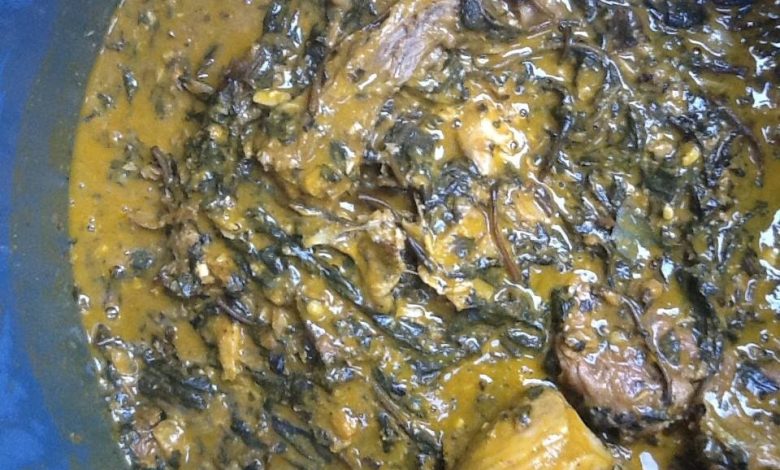
One of such is the bitter tasting, yet tasty and healthy Ofe Onugbu, popularly described as bitterleaf soup, which usually is best relished with Akpu – cassava swallow and starchy energy giving mould…
Bitterleaf soup is basically cooked, and relished by South Easterners from Enugu and Anambra States, but the soup is now eaten by many Nigerians, although the delicious soup is now being relished as a unity soup in Nigeria, a continental soup in Africa and a global and cultural phenomenon around the world, especially wherever Nigerians are found.
Onugbu Soup is usually thickened with different edible thickeners. Anambra and Enugu foodies are always comfortable with the likes of cocoyam paste or powder as thickeners and of course with plenty of fermented ogiri, opei, or dawadawa, locust beans.
Other South Easterners from Imo, Abia, Ebonyi and others are usually comfortable using the likes of offor, Achi, ukpo and even small moulds of boiled and pounded yam. Any of these thickeners are tasty edible thickeners that easily complement the soup.
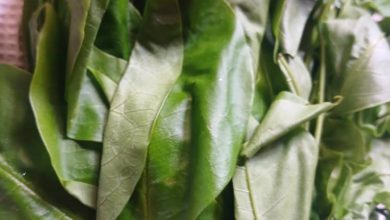
The beauty of the soup is the addition of the leaves, this could be either the long or short shredded ones. Well, which do you prefer? But remember that some love their bitterleaf soup very bitter with the long shreds while some love the short, cleanly washed ones.
Bitterleaf is botanically known as Vernonia amygdalina. The green bitter leaf is a member of the daisy family and a small shrub that grows in tropical Africa, of course, Nigeria is home to bitterleaf.
This vegetable is ubiquitous; it grows virtually everywhere, from your simple garden to the front yard, as well as by the roadside. It has helped to boost the economic empowerment of Nigerians, at home and abroad. Little wonder that many small-scale and medium-scale businesses have gained traction through the Bitterleaf Venture and enterprise, especially the buying, selling and even export of bitterleaf. No wonder, most African stores across the US, UK, Australia and others play host to fresh and dry bitterleaf.
Apart from easily growing in the tropics, it is seen as a very homely plant, since it flourishes effortlessly.
Commonly called bitter leaf in English because of its bitter taste, other African common names include Congo Bololo (D. R. Congo), grawa (Amharic), ewuro (Yoruba), etidot (Efik), onugbu (Igbo), ityuna (Tiv), oriwo (Edo), Awɔnwono (Akan), chusar-doki or shuwaka (Hausa), mululuza (Luganda), labwori (Acholi), olusia (Luo), ndoleh (Cameroon) and olubirizi (Lusoga).
Bitterleaf is very good for consumption, even though very bitter.
Benefits and Values of Bitterleaf
Perhaps the most distinctive part of the bitter-leaf plant is its bitterness.
• Bitterleaf has been used as food and medicine for centuries in Africa.
• It has been used in the management and treatment of a number of health conditions.
• These include malaria, diabetes, loss of appetite, diarrhoea, fatigue and cough.
• Bitter leaf is consumed at least once a day by most people in the southeastern part of Nigeria as a cultural and traditional soup.
• Traditional soups made from bitterleaf are used for culinary and medicinal purposes.
• Bitterleaf juice is usually extracted from the leaves, and this serves also as a very good healthy juice, but it must be taken with caution, because it is highly anti – biotic, and too much intake can cause anaemia.
• This is because a new study, researchers warn that high consumption of bitter leaf by humans can lead to anaemia, especially in menstruating and pregnant women.
Let us visit the kitchen
Recipe for 4 Servings
1 onion (crushed)
2 cups cocoyam (Ede)
1 big bunch of bitter leaf (shredded and washed)
1 kilogram of beef and assorted meat
3 large dry fish (washed)
1 large stockfish (washed)
3 tablespoons ground crayfish
1 teaspoon ground ogiri (locust beans)
2 cooking spoons palm oil
Salt and seasoning to taste
5 pieces yellow or Nsukka pepper (crushed)
Method:
• Wash and season all the meats.
• Add enough salt, seasonings and onion and cook until tender.
• Add the fish, stockfish and crayfish, including the seasonings and locust beans.
• Allow to cook properly to produce the milky stock.
• Add the crushed pepper to the pot and in the meantime, wash and halve the cocoyams.
• Pour into a sizeable pot, add enough water to slightly cover the cocoyam and cook until very soft and pulpy.
• Remove from heat, drain off the water, peel of the bark and pound like yam until very smooth.
• Scoop into a small plate and set aside, until the boiling meat and stock is ready.
• Meanwhile, pour the palm oil into the meat pot. Cover until the colour becomes lighter. Add the cocoyam paste and cover the pot.
• Leave to cook until the paste has melted into a thick consistency.
• Uncover, simmer, stir and add other ingredients (the soup must not be watery).
• Add the washed bitter leaves, stir gently and simmer for three minutes.
• Taste for salt and pepper.
• Remove from heat and serve warm with any swallow, akpu, fufu or pounded yam.
• Hmmnn, the taste is Woah!
It is pertinent to note that any of the thickners can be used in place of the cocoyam. In the same vein, many have resorted to the use of powdered cocoyam [cocoyam powder]. But, the taste of the fresh cand natural cocoyam always makes the soup to stands out from others.