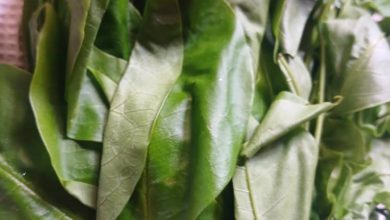
Garri ati Epa (Ijebu Garri cereal), proudly Nigerian superfood that can gain UN Cultural Status
By Lydia Enyidiya Eke

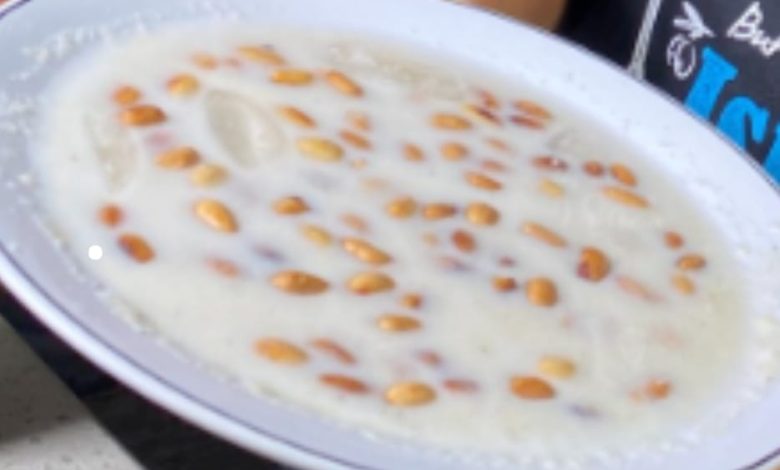

Garri Ijebu is a household name in Southwest Nigeria.
In the global conversation on food heritage, attention is often drawn to exotic cuisines and elaborate dishes.
Yet, some of the most powerful cultural symbols are humble, everyday foods that carry history, identity, and survival within them.
One such food is Ijebu garri, a distinctive cassava product from southwestern Nigeria, whose cultural depth and enduring relevance make it a compelling candidate for inclusion on UNESCO’s Intangible Cultural Heritage (ICH) List.
In running a special series on Nigerian Superfood That Can Make UNESCO List of Intangible Cultural Heritage, in my own opinion, not adding ijebu garri and roasted groundnut will not be a complete list.
This is because Ijebu garri is a well-known starchy food across every Yoruba home in the country and beyond.
It has also impacted Nigerian foodies globally.
From Europe to America, Australia, Asia, and the Middle East, crispy Ijebu garri has its place as Nigerian travel with their unique food.
Thus, if on December 5 2024),the BBC published Ivory Coast’s tasty staple, attiéké, a fermented cassava flour as officially been added to Unesco’s list of intangible cultural heritage, Nigerian Ijebu garri can be added as well.
In showcasing Ijebu garri and roasted groundnut or peanuts as one of Nigeria’s superfoods that can possibly be added to the list, we consider the culinary strength of the food.
The story of Ijedu Garri is a Nigerian culinary narrative that can be shared with a global audience because this snacky staple has a traditional and unique cultural heritage coming all the way from Ijebu in Ogun State.
There are three main types of garri in Nigeria : Yellow Garri, White Garri, and Ijebu Garri.
But ‘Ijebu’ as this staple is popularly known, stands out as the best soakable, uncooked, ready -to – eat cassava cereal one can find in West African Nigeria, across the African continent, as well as across various continents beyond Africa.
The unique selling point of ijebu garri is the simple ability to make a healthy smoothie out of this sour-tasting Nigerian South Western delicacy.
To make a nice smoothie out of Ijebu garri is what we describe as GARIUM SMOOTHIE.
This is simply a sweet combination of ijebu garri, with milk, sugar, honey, and peanuts or groundnuts, depending on how the foodie wants to relish it. Some go as far as adding almond nuts, hazel nuts, cashew nuts, and other nuts they can lay their hands on.
In celebrating the uniqueness of Ijebu, as the name speaks for itself, this garri is from Ijebu land and has been used as a strong economic refuge and strength for small scale, medium scale and large scale farmers and agroprenuers
This sour-tasting smoothie is one of the varieties of Garri in West Africa that is basically produced by the Yoruba, the Ijebus.
But today in Nigeria, many states of the federation and agroprenuers are now producing Ijebu garri as a global delicacy.
Ijebu Garri which has travelled to virtually all continents of the world pleasantly has this sour taste that is great for soaking when mixed with cold water, room temperature water, sometimes sugar and milk and when eaten with a spoon or fork like eating any regular cereal.
Garri is made from Cassava, a special brown and white, hard but fleshy root that is rich in fibre, copper, and magnesium.
It is, however, important to note that Garri is a gluten-free food. This product of fleshy, starchy cassava root does not contain the combination of proteins found in wheat and other grain foods.
Ijebu is best served when the sun is hot and biting.
Why UNESCO ICH LIST
Ijebu garri deserves consideration for inscription on UNESCO’s Intangible Cultural Heritage (ICH) List because it is far more than a food item, it represents a living heritage of a people, an indigenous knowledge, a community identity, and a cultural continuity of the Nigerian people.
This feature piece is therefore expected to serve as an advocacy, an academic writing, and even a cultural promotion for Nigerian Ijebu garri to be added to the global plate.
Ijebu garri is not merely garri. It is a living cultural tradition, shaped by centuries of indigenous knowledge, communal practice, and adaptation.
Its recognition by UNESCO would affirm not only its uniqueness but also the people, skills, and values it represents.
Looking at the indigenous knowledge, at the heart of Ijebu garri is a production process that reflects deep-rooted traditional expertise.
From the careful selection of cassava tubers to extended fermentation and the highly skilled roasting process known locally as garification, every stage requires experience, patience, and precision.
The resulting product, the extra-dry, crisp, and distinctly sour taste of Ijebu, can not be replicated by industrial shortcuts. This knowledge is not written in manuals. It is transmitted orally and practically, often from mothers to daughters and fathers to sons, within households, women’s cooperatives, and farming communities.
The intergenerational transfer of skills aligns squarely with UNESCO’s definition of intangible cultural heritage as knowledge and practices passed down within communities.
The cultural identity of Ijebu garri stands apart from other varieties across Nigeria and West Africa. Its pronounced sourness, dryness, and ability to be eaten without sugar are not accidental traits; they are markers of the Ijebu, as well as the Nigerian identity. For many Ijebu people, preferring unsweetened garri is a cultural statement, an assertion of heritage and pride.
UNESCO places strong emphasis on cultural expressions that are distinctive and community-specific, and Ijebu garri meets this criterion unequivocally. Its taste alone tells a story of place, people, and tradition.
Beyond nourishment, Ijebu garri plays a vital social and communal role. It is a staple across social classes, and it is consumed by farmers, students, professionals, and elders alike. It is offered to guests as a sign of hospitality, packed for journeys, eaten during farm work, and relied upon in times of economic hardship.
In these everyday uses, Ijebu garri reinforces social cohesion, another key consideration in UNESCO heritage inscriptions.
It is a shared food that binds communities together through common experience.
Perhaps no combination better illustrates the uniqueness of intangible heritage than Ijebu garri eaten with roasted groundnuts (peanuts). This combination is not random; it reflects indigenous nutritional intelligence.
The groundnuts provide protein and healthy fats, complementing the carbohydrates in garri to form a balanced, affordable meal.
More importantly, the combination has become a recognized cultural practice, especially amongst students, traders, travellers, workers, and all everyday people.
It demonstrates how tradition adapts without losing its essence, and this is precisely the kind of living, evolving heritage UNESCO seeks to safeguard.
Looking at the role of women, Ijebu garri production is largely driven by women, making it a significant source of income and empowerment in rural communities. From cassava processing to market distribution, the garri economy supports families and sustains local markets across Nigeria and even in the diaspora. UNESCO increasingly values heritage practices that contribute to sustainable development, gender inclusion, and community resilience. Ijebu garri clearly fulfils these objectives.
Well, despite its cultural importance, Ijebu garri faces growing threats: industrial food processing, rising production costs, and declining interest among younger generations. Without deliberate safeguarding, the traditional methods and the cultural meanings attached to them, risk erosion.
UNESCO inscription would help to protect and promote the food.
Ijebu garri meets every major criterion for UNESCO’s Intangible Cultural Heritage List: it is a living tradition, community-based, distinctive, socially meaningful, transmitted across generations, economically sustaining, and in need of safeguarding.
Recognizing Ijebu garri, especially its culturally significant combination with roasted groundnuts, would be a powerful acknowledgement that African everyday foods are not ordinary.
They are repositories of history, identity, and wisdom. In promoting Ijebu garri to the global heritage stage, UNESCO would not only be honouring a food but celebrating a people’s resilience, creativity, and enduring cultural voice.
Let’s visit the kitchen…
*Recipe for 3 servings
. 1 cup ijebu garri
. 1 teaspoon granulated sugar or some cubes of sugar
. A handful of peanuts or any other nut
. 2 teaspoons dry milk or a cup of liquid milk
. 1 cup chilled water
. 1 cup of ice cubes
. 1 cup shredded coconut [optional]
*METHOD
. Pour the garri into a sizeable bowl
. Add the chilled water and bring to a mix
. Add the sugar to taste, as well as the milk
. Add more water if necessary, especially if the smoothie is too thick
. Add the shredded coconuts if you like
. Drop in some ice cubes into the garium smoothie and serve chilled.