Voter apathy deepens as leaders ignore citizens — Ebonyi dialogue demands system overhaul
By Oswald Agwu, Abakaliki

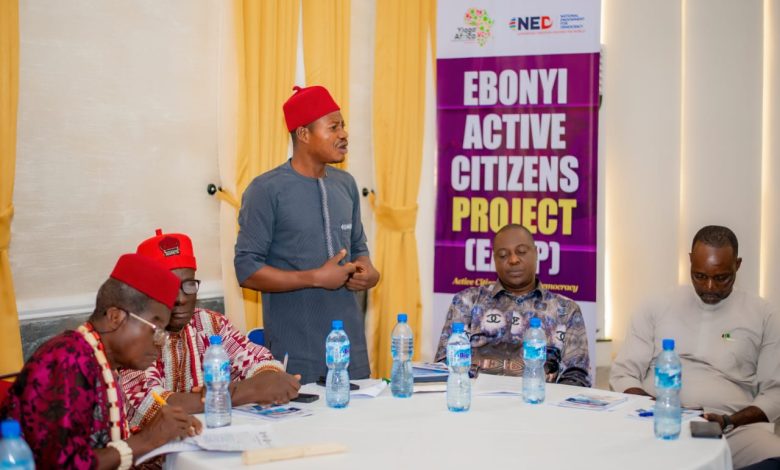

Failure of political leaders to respect citizens’ voices on governance issues is fueling Nigeria’s rising political apathy, stakeholders said on Friday at a one-day roundtable in Abakaliki, the Ebonyi state capital.
The meeting, organised by the Community Outreach and Public Empowerment (COPE) Foundation under its Ebonyi Active Citizens Project with support from YIAGA Africa and the National Endowment for Democracy, brought together public officials, political party leaders, youth and women groups, traditional rulers, CSOs and the media to discuss ways to boost grassroots participation in governance.
Participants said low engagement in governance, especially among youths and women, stems from a widespread belief that their contributions are not recognised or valued in decision-making. That perception, they noted, has entrenched a culture of passive citizenship at the community level.
Other barriers identified were gaps in citizens’ knowledge of civic rights and responsibilities, and the absence of regular, structured platforms for engagement between citizens and local government officials. Both factors, participants said, have limited dialogue, feedback and collaboration.
Woman activist Goodness Mgbaja pointed to cultural norms, social expectations, economic constraints and low confidence as major obstacles for women. She called for men’s support, deliberate economic empowerment for women, stronger financial and inheritance rights, and “a safe political space that guarantees women’s safety.”
Speaking for the youths, David Nwankwo blamed “deliberate economic policies that continue to impoverish young Nigerians” for discouraging political participation.
CSO representatives Victoria Ebere Eze and Oliver Chima Ajah urged citizens to focus on grassroots leaders and demand accountability from local government chairmen on how allocated funds are used.
To reverse apathy, participants recommended a total overhaul of Nigeria’s electoral system “to ensure that only leaders chosen by the electorate preside over the affairs of the people.”
Setting the tone for the dialogue, COPE Foundation Executive Director Azubuike Mgbebu said the Ebonyi Active Citizens Project aims to strengthen democratic participation, promote civic awareness and enhance inclusive governance in Abakaliki, Ikwo and Ezza South LGAs.
He disclosed that the project has trained 300 grassroots civic champions designated as Community Active Citizens Advocates, and over 80 Campus Active Citizens through town hall meetings and youth mobilisation. The initiative has also deepened strategic advocacy, citizen-government dialogue, and women and youth inclusion in governance.
“The EACP ultimately seeks to transform passive citizens into active participants in governance, thereby supporting stronger democratic systems and more responsive leadership at the local levels,” Mgbebu said.
Participants, including Governor Francis Nwifuru’s Special Assistants on Youth Mobilisation, Godfrey Agbe, and Community Engagement, Paulinus Nwanchor; traditional rulers Eze Stephen Ukpa of Okpuitumo Abakaliki and Pius Nte Ubeh of Ndufu Echara Ikwo; and Director of Planning in the State Ministry of Budget, Planning and Monitoring, Chijioke Ogbodo, pledged to work together to build a state where citizens know their civic rights and are ready to use them for more inclusive governance.