The Taliban, Boko Haram and what Nigeria must do urgently, By Theophilus Abbah

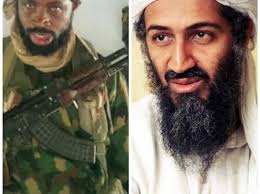

The Taliban now holds sway in Afghanistan, a continent apart from Nigeria, but the waves from its activities have always shaken Jihadist enthusiasm in our clime. For the late 1990s to early 2000s, its franchise, Yobe Taliban, who preached the Jihadist brand of Salafi doctrine, created panic in communities. The choice of the name ‘Taliban’ by the strange sect was not accidental. It was imported from Afghanistan where its founder, one Mohammed Ali, had had his fill of the militant Jihadist doctrine, supposedly meant to purge or purify Islam from North to South of the earth. Like the Afghan Taliban, Yobe Taliban operated with fury and violence from the Kanama desert to adjoining communities.
Yobe Taliban to Boko Haram
The Taliban fighters
Dislodged by the police from the dunes of Kanama, the sect migrated to Goza Hills in Borno State to practice its terror-filled brand of Islam. But like a leopard which cannot alter its skin, the Yobe Taliban ran foul of the law and in 2003 attracted the wrath of the police. In a fierce battle against men of the Nigeria Mobile Police Force, the sect was dislodged, but they melted into the populace in Maiduguri, and literally took over Markas mosque where the late Muhammed Yusuf, founder of Boko Haram, was Imam. Many members of the Yobe Taliban were ferried from the Markas mosque in Maiduguri to Afghanistan, in the aftermath of September 11, 2001 terror attack and United States invasion of Aghanistan, purportedly to study, but auspiciously to fight in the Afghan Taliban against the US and North Atlantic Treaty Organization (NATO) coalition in that country. Not surprisingly, bomb makers trained in Aghanistan returned to make Improvised Explosive Devices (IEDs), which Boko Haram fighters utilized in 2009 when the sect declared Jihad against the Nigerian government.
Harvest of disabilities under Taliban
Those who lack historical understanding of The Taliban would applaud their take over of Afghanistan as victory for Islam in the so-called clash of ideology. The 20-year-long war before it came into power in 1996 left millions of peasants and Mujahideen, not just deaths, but millions of disabled persons. Foreign aid organisations reportedly provided about 1.5 million victims of the war with leg amputees with artificial limbs. On its parts, the ranks of the Taliban were filled with disabled persons. The leader of the group, Mullah Omar, lost one eye; former Justice Minister Nurudeen Turabi was one-eyed; former Foreign Minister Muhammed Ghaus also had one eyed; the former Mayor of Kabul lost one leg and two fingers; and many military commanders had to live with all sorts of disabilities.
The disabilities were signatures of two decades of war by The Taliban which had previously ruled Afghanistan from 1996 to 2001, a chaotic 8-year rule of battles, massacres, tension, amputation, and confusion in the name of strict Sharia rule. The then United Nations Secretary General Kofi Annan, in 1998, raised the alarm over the multiplicity of battles and bloodshed under the Taliban. Annan had said, “In the country of 20 million people, 50,000 armed men are holding the whole population hostage.” As a result of the war, Afghanistan became more fragmented along tribal lines, as against the original advantage of The Taliban who claimed to have united the divided country under Islamic rule. Indeed, The Taliban, who received support from Americans, Saudi Arabia and Pakistan against the Russians do not have a better yesterday.
Islamic Revolution regimes
Unfortunately, the fall of the Afghan government to the Taliban could embolden other terrorist organisations, especially in Africa, to try their luck to take over governments and establish Islamic caliphate in their regions. Just as it was in 1979. The take over of Iran in an Islamic Revolution fired up the zeal of Jihadist political parties and movements to replicate similar feat in their countries. Even Nigeria’s Boko Haram had looked forward to a future when Jihadists would overrun the country and declare it an Islamic Caliphate.
A report about the sect by the United States Institute of Peace (USIP) confirms this desire thus: “Boko Haram is an Islamic sect that believes northern politics has been seized by a group of corrupt, false Muslims. It wants to wage a war against them, and the Federal Republic of Nigeria generally, to create a “pure” Islamic state ruled by sharia law.” Though Boko Haram, as we know it, may have faded and given way to the Islamic State of West African Province (ISWAP), the possibility of the new group plotting to replicate the feat of The Taliban in Afghanistan is not in doubt.