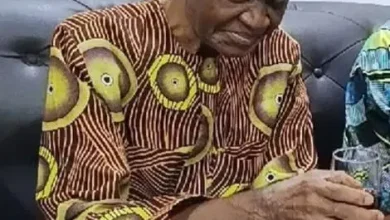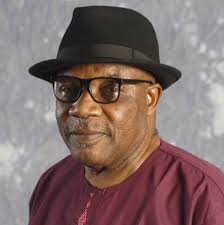

The Chairman of RT Brisco Plc, Sir Sunny Nwosu, recently celebrated his 70th anniversary as he promised in a media interview that he would.
Sir Sunny who is perhaps the most powerful shareholder in the country owing to the fact that he is the founder and National Co-ordinator emeritus of Independent Shareholder Association of Nigeria (ISAN), the largest shareholder grouping in Nigeria nay Africa and the fact of his knowledge of boardroom politics and shareholder activism who is well regarded in Nigeria’s capital market sector.
The celebration was graced by eminent people including Erastus Akingbola, former Intercontinental Bank CEO, Steve Oritjeafor, former Zenith Bank Chairman, Dr Kuku, co-founder Eko Hospotal Lagos and other corporate gurus across the finance and productive sectors of the nation’s economy.
The belief in the sector is that Sir Sunny, who is a strong leader in Boys-Brigade Nigeria and the Catholic Church is someone who rose from grass to grace, from an office boy in Daily Times Nigeria to board membership of several companies. The influence of Nwosu was felt by all and sundry when he birthed the idea of using representative-style AGMs to save many cash-strapped companies and ensured that their cash challenged shareholders got dividends on time to survive Covid-19 pandemic.
Some people took the glory and began to call it Nigeria’s ingenius reaction to the pandemic but it was Sir Sunny and ISAN being as inventive as ever to make the capital market better than it could have been.
For some experts, Nwosu’s success owes to the fact that he was a protege Alhaji Babatunde Ajose, the first indigenous Managing Director of Daily Times Nigeria who was himself a protege of Nigeria’s first President, Dr Nnamdi Azikiwe at the West African Pilot years ago.
But in a 2021 interview with a newspaper, Sir Sunny had this to say, ”I was at Boulos Nigeria just coupling Suzuki machines as well as packing and selling as an unskilled worker. Within that period, I was able to save some money, about N17 or something like that to buy into Daily Times shares.
”I read in the papers about the person of Alhaji Babatunde Jose, who I eventually adopted as my father, not that I lost my father, but for what he had impacted in me. So, I bought the shares. I was just about 17 or 18 years old when I bought the shares. I also read from some newpapers that they were going to have an Annual General Meeting (AGM). So I managed to attend and spoke at the AGM. And he looked at me, saying this looks like my youngest shareholder. Actually I was, because when you talk about shareholding, you would see retirees during that period. So, I summoned courage to meet with him after the AGM. And don’t forget that the status of Alhaji Ajose was just like the president of Nigeria. Whenever he spoke then, Nigeria had spoken. So, he invited me to his house in Ikoyi and I went there, waiting patiently to see him. He was excited to see me and thereafter invited me to Daily Times office, and that was what I believed God used to transform me.
”He invited me to his office and asked me some questions and I told him my intention was to read to become a journalist. But then, I had to start somewhere. He then asked me, ‘will you like to work in Daily Times?’ and I answered ‘yes’. I could not fit into journalism because there was a school that trained journalists in Daily Times. So, he now sent me to the late David Attah, who was the Personnel Manager at the time. He looked round and said there was no space. Would I accept to be an office boy?
”Yes, because when you move with intelligent people, everything you think about would be how to be intelligent. So, that was how I started working in Daily Times and I was exposed to accounting and all that while being an office boy. So, they opened up a new department where I was transferred to and that department handled accounting and monetary issues of the organisation. In summary, that was how I became interested in accounting and the bigger interest was in share-buying because at the time, any money I earned, more than half would go into share-buying and he authorised approval of loans to me provided I wanted to use them to buy shares.”