


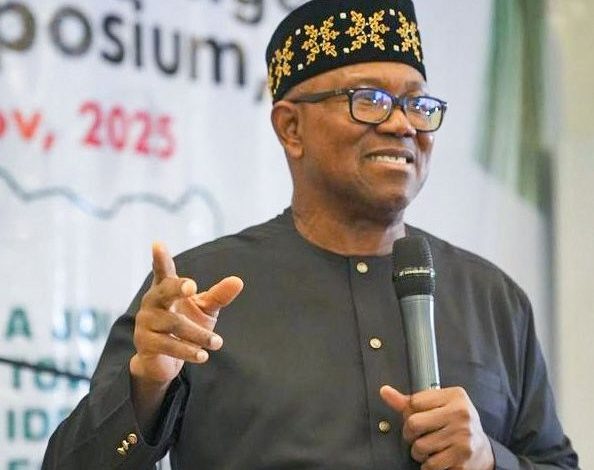

A fresh political realignment may be unfolding within Nigeria’s opposition space as former Labour Party presidential candidate, Peter Obi, signals his readiness to align with the African Democratic Congress (ADC), a move analysts say reflects strategic calculation rather than ideological surrender.
In a widely followed X Spaces conversation on December 28, 2025, Obi openly declared his intention to “join ADC as a member” and work with others to “pick the best man for the job,” a statement that has since sparked intense political debate across the country.
Political strategist and management consultant, Chief Blakey Okwudili Ijezie describes the move as “a calculated response to Nigeria’s evolving opposition arithmetic,” rather than a sudden political shift.
“Obi’s statement acknowledges a hard truth of Nigerian politics — popular movements alone do not win national power without institutional convergence,” Ijezie said. “This is not retreat; it is realism.”
According to him, Obi’s growing openness to coalition politics reflects an understanding that electoral victories in Nigeria are built on structure, spread, and strategic compromise — not moral enthusiasm alone.
Of particular significance, analysts say, is Obi’s public expression of respect for former Vice President Atiku Abubakar, whom he described as “a leader and a senior brother” he is willing to work with. The remark is being interpreted as a deliberate attempt to cool longstanding tensions within the opposition and lay the groundwork for a broad-based alliance.
“This is not submission,” Ijezie noted. “It is recognition of political hierarchy and experience. In coalition politics, ego must give way to effectiveness.”
Observers believe the ADC platform may now serve as a convergence point for fragmented opposition forces, especially as the 2027 general election approaches. However, analysts warn that such an alliance will only survive if internal processes for candidate selection remain transparent and credible.
“The promise to ‘pick the best man for the job’ will ultimately be tested by process, not rhetoric,” Ijezie added. “If internal democracy fails, the coalition will collapse under its own contradictions.”
He further argued that Obi’s move marks a strategic recalibration rather than an ideological retreat, noting that Nigeria’s political future depends less on perfect candidates and more on functional coalitions capable of governing effectively.
“History will not judge this moment by who aligned with whom,” Ijezie concluded, “but by whether the alignment produced leadership equal to Nigeria’s challenges.”
The coming months, analysts say, will determine whether the emerging opposition alliance matures into a credible governing alternative—or becomes another footnote in Nigeria’s long history of fractured opposition politics.


