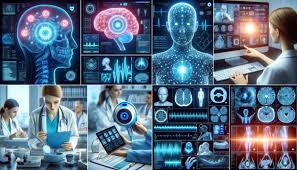

The integration of Artificial Intelligence (AI) into the field of medicine has brought about transformative changes, enhancing the efficiency, accuracy, and accessibility of healthcare. By leveraging advanced algorithms, machine learning, and big data analytics, AI is revolutionizing how medical professionals diagnose, treat, and manage various health conditions. This article explores the myriad ways AI has improved the practice of medicine, touching on diagnostics, personalized treatment plans, operational efficiencies, and patient care.
Enhanced Diagnostic Accuracy
One of the most significant contributions of AI in medicine is its ability to improve diagnostic accuracy. Traditional diagnostic methods often rely on the subjective judgment of healthcare professionals, which can lead to errors and misdiagnoses. AI, however, utilizes machine learning algorithms that can analyze vast amounts of medical data, including imaging, lab results, and patient histories, to identify patterns and anomalies that might be missed by the human eye.
For instance, AI-powered imaging tools have shownremarkable accuracy in detecting conditions such as cancer, heart disease, and neurological disorders. Deep learning algorithms can analyze medical images, such as X-rays, MRIs, and CT scans, to identify early signs of diseases with precision that rivals or even surpasses that of experienced radiologists. This early detection capability is crucial for effective treatment and improved patient outcomes.
Personalized Treatment Plans
AI has the potential to revolutionize personalized medicine by tailoring treatment plans to the individual needs of patients. By analyzing a patient’s genetic makeup, lifestyle, and other personal data, AI systems can predict how they will respond to different treatments. This approach allows healthcare providers to develop more effective and personalized treatment plans, reducing the trial-and-error process often associated with finding the right medication or therapy.
For example, AI algorithms can analyze genetic data to determine the most effective cancer treatment for a particular patient, taking into account specific genetic mutations and biomarkers. This personalized approach not only enhances the efficacy of treatments but also minimizes adverse effects, leading to better patient compliance and outcomes.
Operational Efficiency and Workflow Optimization
AI is also playing a crucial role in streamlining administrative and operational aspects of Healthcare, thereby improving overall efficiency. By automating routine tasks such as appointment scheduling, billing, and medical record management, AI frees up valuable time for healthcare professionals to focus on patient care.
In hospitals and clinics, AI-powered systems can predict patient admission rates, optimize staffing levels, and manage resources more effectively. For instance, predictive analytics can forecast patient volumes in emergency departments, allowing for better allocation of staff and resources to handle peak times, thus reducing wait times and improving patient satisfaction.
Additionally, AI-driven tools can assist in clinical decision support by providing real-time information and recommendations to healthcare providers. These tools can analyze patient data and suggest possible diagnoses, treatment options, and potential risks, aiding doctors in making informed decisions more quickly and accurately.
Improved Patient Monitoring and Management
AI has significantly enhanced the ability to monitor and manage chronic diseases and other long-term health conditions. Wearable devices and remote monitoring systems equipped with AI capabilities can continuously track vital signs and other health metrics, providing real-time data to healthcare providers. This continuous monitoring allows for the early detection of potential issues and timely interventions, which can prevent complications and hospitalizations. For patients with diabetes, for instance, AI-powered systems can monitor blood glucose levels and provide personalized recommendations for diet and insulin dosages. Similarly, for patients with heart conditions, AI can analyze data from wearable devices to detect irregular heart rhythms and alert healthcare providers to take immediate action if necessary.
AI in Drug Discovery and Development
The process of drug discovery and development is notoriously time-consuming and expensive. AI is transforming this field by accelerating the identification of potential drug candidates and optimizing clinical trials.
Machine learning algorithms can analyze vast datasets of chemical compounds, biological targets, and clinical outcomes to identify promising drug candidates more quickly and accurately than traditional methods. AI can also predict how new drugs will interact with various biological systems, helping to identify potential side effects and efficacy early in the development process. This predictive capability can significantly reduce the time and cost associated with bringing new drugs to market, ultimately benefiting patients by providing access to innovative treatments more rapidly.
Ethical Considerations and Future Directions
While the integration of AI in medicine holds great promise, it also raises important ethical considerations. Issues related to data privacy, algorithmic bias, and the need for transparency in AI decision-making processes must be addressed to ensure the responsible and equitable use of AI in healthcare.
Moreover, the future of AI in medicine will likely involve greater collaboration between humans and machines. Rather than replacing healthcare professionals, AI is poised to augment their capabilities, providing tools and insights that enhance their expertise and improve patient care. As AI technologies continue to evolve, ongoing research and investment in AI-driven healthcare solutions will be essential to fully realize their potential.
Conclusion
The impact of AI on the practice of medicine is profound and far-reaching. By enhancing diagnostic accuracy, personalizing treatment plans, improving operational efficiency, and enabling continuous patient monitoring, AI is revolutionizing healthcare delivery. As we navigate the ethical and practical challenges of integrating AI into medicine, the ultimate goal remains clear: to improve patient outcomes and ensure that high-quality healthcare is accessible to all. The future of medicine, augmented by AI, promises to be more precise, efficient, and patient-centered than ever before.