Foreign direct investment to Nigeria declines amidst President Tinubu’s frequent overseas trips, uncoordinated reforms – Obi

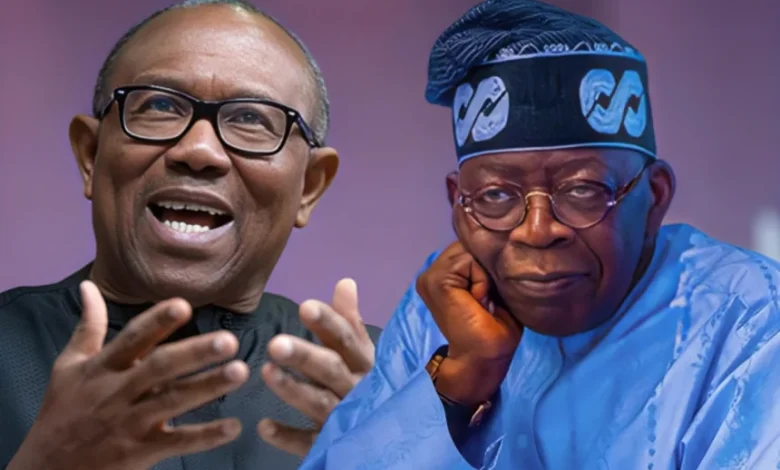

Peter Obi, presidential candidate of Labour Party, LP, in 2023 general election, has expressed worry about Nigeria’s declining foreign direct investment (FDI).
Obi has also blamed ineffective leadership, poor governance, and uncoordinated reforms as being responsible for the country’s economic stagnation.
On the latest capital importation report by the National Bureau of Statistics (NBS), Obi noted that despite the frequent overseas trips by the President, ministers, and other government officials in search of FDI, Nigeria’s poor performance in key governance indicators—such as rule of law, regulatory quality, government effectiveness, and voice and accountability—continues to undermine investor confidence.
Realnews quotes the NBS as saying that the FDI to Nigeria fell sharply by about 70% in the first quarter of 2025, dropping to $126.29 million from $421.8 million in the last quarter of 2024. Of the $5.64 billion total capital importation in Q1 2025, FDI accounted for just 2.24%, compared to 8.2% in Q4 2024.
Obi said the trend is “disturbing,” adding that 90% of the imported capital went into speculative money market instruments, which offer little or no contribution to industrial growth or job creation and can easily exit the economy.
According to him, sustainable growth cannot be achieved without strong leadership and coordinated reforms.
“Capital flows to the manufacturing sector declined by 32.1%, from $191.92 million in Q1 2023 to $129.92 million in Q1 2025. This is a clear sign of the lack of trust in a government whose reforms remain reactive and uncoordinated,” Obi said.
He cited UNCTAD data, stating that while global FDI flows fell in 2024, Africa experienced a significant 75% rise to $97 billion. Egypt led the continent with $46.58 billion, followed by Ethiopia ($3.98 billion), Côte d’Ivoire ($3.80 billion), and several others.
Nigeria, however, received just $1.08 billion—about 1% of Africa’s total—marking a 42% drop from 2023. This was followed by a further 75% decline between Q4 2024 and Q1 2025.
He said: “The so-called ‘Giant of Africa’ cannot continue this way,” Obi warned. “We must fix leadership and governance if we truly want to attract investment, create jobs, and achieve sustainable development.”