
“Nigerians have surrendered to Tinubu’s state of disorder. That is why they are stuck in The Strait of Hormuz when governments and peoples of other lands are finding a creative way out of the choking environment.”
One straightforward question is at the centre of the goings-on in Nigeria today. That question is: what can be done about a people who want their situation to change for good but are unwilling to take any action that can upset their paralyzing situation? This question resonates. It invites us to action. And until we find a reasoned answer to it , Nigerians will continue to voyage with self-inflicted red eye.
In seeking to answer this sticky question, it will be important to understand the real makeup of the Nigerian. Is he suffering from hypnosis or is he a normal human being? This question is prompted by the advent of the Bola Tinubu presidency. Since it happened on Nigeria, the people who inhabit the blighted space called Nigeria have not been behaving like normal human beings. They appear more like hypnotic beings who are incapable of voluntary action.
The paralysis started from the beginning. The election that brought Tinubu to power was badly compromised. Objections were raised about his emergence. But none was backed by any action. Upon assumption of office, Tinubu, in a most cavalier fashion, announced that subsidy was gone. A few hours after the announcement, prices of petroleum products, particularly petrol, shot sky high. Nigerians grumbled loudly. But that was as far as it went.
In the absence of a concerted and concrete course of action by Nigerians to the removal of fuel subsidy, Tinubu, soon afterwards, took another disruptive measure. He merged the official and black market rates of the foreign exchange market. Some people at first imagined that it was a good measure until they saw the Nigerian currency exchange for over N1,500 to one US dollar. Before Tinubu, the Naira under the administration of Muhammadu Buhari, exchanged at N400 to $1. Tinubu’s disruptions, expectedly, came with a domino effect. Within days, cost of goods and services quadrupled. Life in Nigeria became unbearable. Hunger and anger formed an alliance, tormenting Nigerians to no end. Today, poverty is walking on all fours in Nigeria owing to the harsh economic policies of the Tinubu administration.
When it began, Mr Wale Edun, who has now been made to kiss the dust, was saddled with the unenviable task of managing a battered economy. He did not get a good hang to it. He showed no expertise. He merely guessed as much as he could. I watched him closely then and dismissed him as a non starter. I dropped hints to that effect repeatedly in this Column. When therefore Tinubu put together a tripartite economic advisory committee comprising the federal government, the sub-nationals and the private sector to salvage the economy, the move was largely applauded. But I sneered at it because of what I described then in the March 4, 2024 edition of this Column as “the monumental failure of the economic team he put together under Wale Edun to manage the Nigerian economy.” More than two years after the committee was set up, nothing has been heard about it. It probably never took off. But what we do know is that Mr Edun’s poor grasp of economic issues finally found him out. But Edun is not alone in this story of failure. He is just the fall guy in the republic of the rudderless.
The hard fact is that Edun’s exit will not change anything. His successor, Taiwo Oyedele, is a competent chap. You can see that from a distance. Unfortunately, he won’t be able to save the Nigerian economy under Tinubu’s watch. He will suffer a case of when the head is rotten, the whole body falls sick.
As the hypnotic lot that they are, Nigerians have been watching morosely as the house they live in threatens to collapse. The Tinubu economic order has emasculated them beyond measure. But the bad condition has been deepened by the muscle flexing over The Strait of Hormuz. This vital maritime chokepoint connecting the Persian Gulf with the Gulf of Oman and the Arabian Sea is the talk of the moment. The US-Iran war has drawn attention to this primary pathway that accounts for one-fifth of the world’s daily oil and liquified natural gas shipments. With America and Iran locked in a battle nerves, oil supply to different parts of the world is suffering.
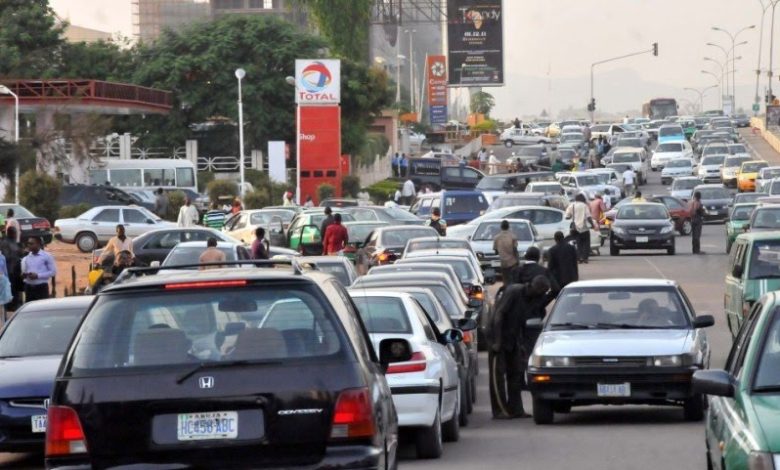
Whereas many other countries affected like Nigeria have adopted home-grown approaches in order to ameliorate the biting effects of the closure and, sometimes, partial reopening of Hormuz, the Nigerian government is looking helpless. It has done absolutely nothing about the escalating cost of petroleum products. The situation has taken the hardship in the land to a new height. But government is just sitting askance. For it, The Strait of Hormuz is to blame.
What about the people? What is their own response to the apparently Hormuz-induced economic crisis? There is nothing to point to. The people are not asking questions. They are buying a liter of fuel for nearly N1,500. But they don’t seem to be complaining. They are just choking under the heat of Hormuz. Hormuz has become the new name for the hardship in Nigeria. It is the reason why the suffering in the land will have no end. Government is enjoying the excuse that Hormuz provides and the people, ever paralyzed of will, cannot find a pathway out of their hypnotic state.
What a people. What, indeed, can be done about a people who are consistently defeated by situations they can take control of? As Nigerians look on in their usual, accustomed manner, President Tinubu is scheming a comeback. He is not bothered about his non-performance in office. He is not perturbed by the fact that he has run the country aground. He wants to remain in office and inflict more damage on Nigeria and Nigerians. He wants to perpetuate his reign of nepotism. He is insistent on making cronyism a state policy.
In normal climes, seating presidents canvas for second tenure on the strength of their performance in office. In Tinubu’s Nigeria, second tenure must be procured by hook and crook. Governors must be coerced into joining the president’s party. Under Tinubu, opposition politics is outlawed. No one is allowed to contest the office of president with him. He will be delivered wholesale to Nigerians for a fresh tenure whether they like him or not.
In the face of all this, Nigerians have moaned and groaned. But they are not going beyond wailing and gnashing of teeth. Some have resorted to prayer in the hope that God will intervene. When a people shirk their responsibility while hoping on an unseen being to come to their rescue, that signals surrender. Nigerians have surrendered to Tinubu’s state of disorder. That is why they are stuck in The Strait of Hormuz when governments and peoples of other lands are finding a creative way out of the choking environment.
QUOTE:
“Nigerians have surrendered to Tinubu’s state of disorder. That is why they are stuck in The Strait of Hormuz when governments and peoples of other lands are finding a creative way out of the choking environment.”