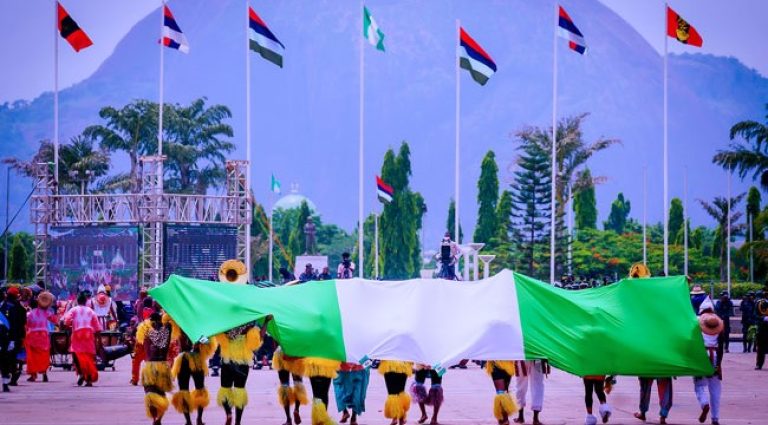

As June 12 Democracy Day 2025 comes up on Thursday, the question on the lips of citizens remains: To what extent has the nation’s democracy stabilized, considering the attitude and character of the ruling class.
Barr Olalekan F. Ojo, a Lagos human rights lawyer and strong advocate of social justice, in an interview with our correspondent, noted that June 12 has become a date that symbolises Nigerians’ struggle for democracy, reports Sunday Independent.
He noted however that many Nigerians have been asking, “How far have we really come? Has our democracy stabilised, or are we still stuck in a cycle of promises and disappointment?”
Barr Ojo who is the Managing Partner, Platinum & Taylor Hill LP, a leading law firm in Nigeria, stated: “Let us start with the truth: yes, we have made progress. We have regular elections. We have a constitution. We have a judiciary that, in many cases, still stands firm against abuse of power.
“But, stability in a democracy goes far beyond just having structures in place. It is about the mindset of the people in power. And that is where things get shaky.
“Too often, Nigerian politicians treat politics like a personal business venture. There is little ideological difference between parties, and even less accountability to the people.
“Elections are treated like do-or-die affairs, not a contest of ideas. Many political leaders still see public office as a means to enrich themselves, rather than a duty to serve.
“And what does that mean for the average Nigerian? It means disillusionment. It means low voter turnout. It means people feeling like their voices do not matter, and sadly, they are not wrong to feel that way.
“But, all hope isn’t lost. Civil society groups are speaking up more than ever. The youth are finding their voice—just look at movements like #EndSARS.
“The judiciary, while not perfect, has shown courage in some key moments. And our press, though under pressure, continues to shine a light where others would rather keep things in the dark.
“So, has democracy stabilised in Nigeria? Not quite. We are still very much in the growing phase. The foundation is there, but the house is shaky.
“Until our leaders begin to truly put the people first—respecting the rule of law, being transparent, and governing with empathy—June 12 will remain more of a symbol than a reality.
“We have the potential. What we need now is the political will—and a national awakening—to make our democracy work not just on paper, but in practice.”
Barrister Emeka Iheonu, another Lagos lawyer, stated: “Most Nigerian politicians are too selfish and greedy for my liking.
“They do not care for the electorate, but always think about themselves despite the wealth they have amassed for themselves forgetting that they will surely die one day.
“They have refused to learn from notable world leaders. Some are actually trying and will not be forgotten. If I become a politician, I will strive to leave lasting legacies by God’s grace.”
Tola Oresanwo, an activist and Director of Administration and Programmes, Centre for Anti-corruption and Open Leadership (CACOL), said: “Nigeria’s democracy, while enduring since 1999, remains fragile and uneven in its consolidation.
“Although regular elections have become a norm, the character and conduct of many politicians and the ruling class often undermine democratic ideals.
“Issues such as electoral malpractice, vote buying, disregard for the rule of law, and suppression of dissent reflect a political culture still steeped in authoritarian tendencies.
“The lack of internal democracy within political parties, coupled with corruption and impunity, further erodes public trust in democratic institutions.
“While civic engagement is growing and the judiciary has occasionally acted independently, the overall political environment remains marked by elite dominance and a disconnect from the people’s needs.
“Therefore, while Nigeria has made strides in sustaining democratic structures, the substance of democracy like accountability, transparency, and genuine representation, remains under threat.
“For democracy to truly stabilise, a shift in political values and leadership accountability is urgently needed.”
Professor John Ebhomien, chieftain of the ruling All Progressives Congress (APC), stated: “June 12, a day etched in Nigeria’s history, marks the country’s Democracy Day, commemorating the annulment of the 1993 presidential election widely regarded as the freest and fairest in Nigeria’s history.
“The election, won by Chief MKO Abiola, was a beacon of hope for democracy, but it was abruptly halted by General Ibrahim Babangida’s military regime.”
“While Babangida’s recent book has sparked controversy by revealing the reasons behind the annulment, it takes courage to own up to past decisions.
“As a nation, we can learn from this experience, embracing accountability and forgiveness. After all, to err is human, and forgiveness can be liberating.
“Perhaps it is time for Nigerians to consider forgiveness and move forward, acknowledging the complexities of our history.”