

AfCFTA: Nigeria moves to reposition ports as West Africa’s trade hub — Dantsoho

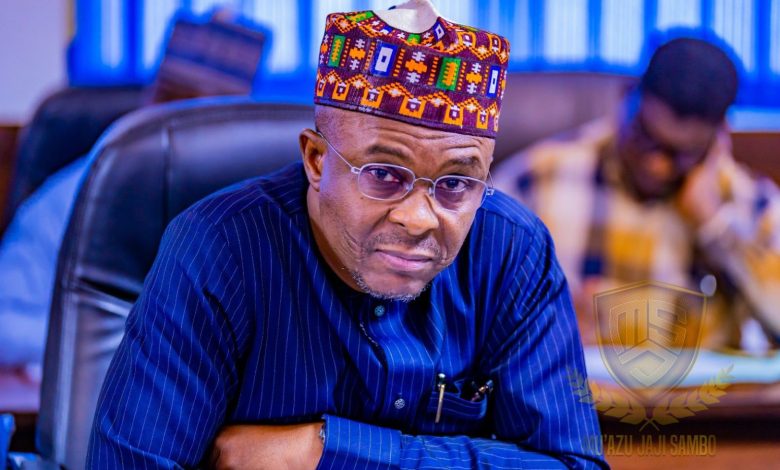

AfCFTA: Nigeria moves to reposition ports as West Africa’s trade hub — Dantsoho
Nigeria is intensifying efforts to reposition its ports as the leading gateway for regional trade under the African Continental Free Trade Area (AfCFTA), with sweeping reforms targeting infrastructure, efficiency, security and digital transformation.
Managing Director of the Nigerian Ports Authority (NPA), Dr. Abubakar Dantsoho, said the country can no longer rely solely on its geographic advantage if it hopes to dominate cargo flows in Africa’s rapidly integrating market.
Speaking at an industry forum in Lagos, Dantsoho stressed that efficiency, innovation and speed would determine which countries emerge as leaders under AfCFTA.

“The time has come for a paradigm shift in Nigeria’s economy towards full utilisation of our marine resources,” he said. “Nigeria’s geographical advantage alone is no longer sufficient. Efficiency, speed, innovation and reliability will define leadership in this new era.”
The reforms form part of President Bola Tinubu’s broader economic diversification agenda anchored on the newly created Ministry of Marine and Blue Economy, headed by Adegboyega Oyetola.
The ministry is coordinating efforts to unlock Nigeria’s estimated $3 trillion blue economy potential through port modernisation, digitalisation and expanded maritime infrastructure.
As part of the initiative, the Federal Government secured legislative approval for a $1 billion loan to rehabilitate the Lagos Port Complex and Tin Can Island Port, two of the country’s busiest maritime gateways.
The project is expected to address decades of infrastructure decay, improve cargo handling capacity and boost Nigeria’s competitiveness in regional and global trade.
Beyond Lagos, the government has commenced upgrade plans for ports in Warri, Port Harcourt, Onne and Calabar, while deep seaport projects in Bayelsa, Akwa Ibom, Cross River and Ondo are also being advanced to expand cargo capacity nationwide.
Oyetola said the administration is pursuing balanced development across all port corridors to stimulate regional economic growth and improve connectivity.
The government is also accelerating the deployment of digital systems, including the Port Community System and the National Single Window platform, aimed at reducing bureaucracy, improving transparency and cutting cargo clearance time.
Industry stakeholders believe the reforms could significantly lower logistics costs and improve Nigeria’s attractiveness as a regional logistics hub.
To strengthen cargo evacuation and reduce congestion, authorities are integrating rail transport, inland dry ports and barging systems into the logistics chain.
Dantsoho noted that efficient hinterland connectivity remains critical to sustaining gains from port modernisation.
On security, Nigeria has now recorded more than four years without piracy incidents, a feat attributed to the Deep Blue security architecture and enhanced maritime surveillance.
The improved security environment has boosted investor confidence and encouraged greater private sector participation in port development projects.
According to Oyetola, agencies under the Marine and Blue Economy Ministry increased combined revenue from N700.79 billion in 2023 to about N1.83 trillion in 2025 due to improved efficiency and regulatory reforms.
Despite accounting for over 60 per cent of West Africa’s GDP, Nigeria currently handles only about 25 per cent of the region’s cargo traffic — a gap Dantsoho described as evidence of underutilised potential.
“It is worrisome that Nigeria handles just 25 per cent of West Africa’s cargo despite its economic size,” he said.
Analysts say AfCFTA presents Nigeria with both a major opportunity and a serious challenge, as countries with efficient and technology-driven ports are likely to dominate intra-African trade.
With ongoing reforms, the Federal Government is betting heavily on the maritime sector to drive economic growth, boost non-oil exports and cement Nigeria’s position as Africa’s leading trade and logistics hub.


