A Taste of Kilishi: A cultural Northern Nigerian delicacy that deserves UNESCO ICH recognition
By Lydia Enyidia Eke


Some years ago, I traveled all the way to Sokoto State for my youth service, and that journey gave me something I didn’t expect, a beautiful encounter with Kilishi.
I saw the Malams. I watched the Suya sellers roast beef over open flames, letting it cook until well done.
But they didn’t stop there. After cooking, they dried the meat, then mixed in the yaji, the pepper, the kuli kuli, the salt, and all the seasonings.
That was when I understood that this is beyond Suya. This is what we now call Kilishi.
It is a situation where plenty of pepper meets meat, meets smoke, meets dryness. And the result is unforgettable.
The flashbacks were so vivid when young intern reporter, Deborah Ayanfeoluwa Adetokunbo, a 100 level Mass Communication student of University of Benin sent me a culinary narrative on Kilishi.
Kilishi comes from Northern Nigeria. This traditional and cultural delicacy is made from goat meat, lamb, or beef.
Today, it has become a national phenomenon, continental and inter continental culinary relish.
There is no place I travel to in Nigeria where I don’t find Kilishi being sold. Even now, supermarkets stock them and sell them as well packaged Nigerian dry meat.
For me, Kilishi is more than a snack. It is a perfect example of traditional culinary cultural heritage,one that Nigeria should proudly add to the UNESCO intangible list.
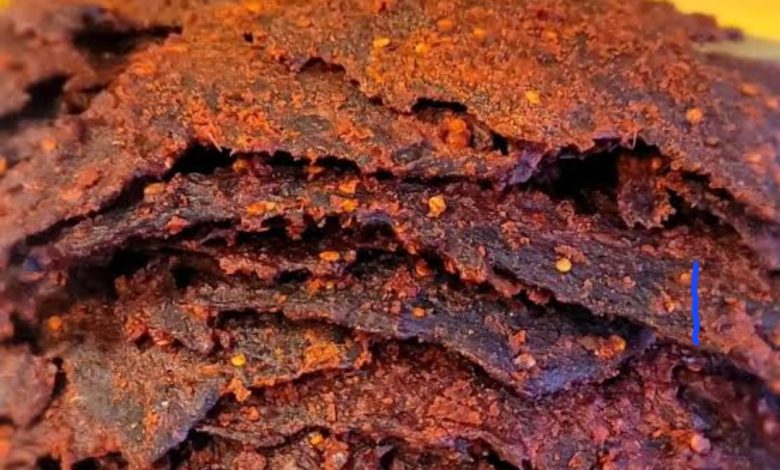
It is paper-thin, crunchy in some bites, chewy in others, and always, always packed with pepper and smoke.
Unlike Suya, which is tender and eaten almost immediately after grilling, Kilishi is dried for preservation, which means the flavour becomes concentrated. Intense. Addictive.
What started in the north has now spread like a spicy wave across Nigeria. There’s no state you travel to today where you won’t find Kilishi being sold. Not in fancy packets. Not hidden in corners, but boldly on food shelves and food stalls.
You cannot miss Kilishi around busy motor parks in Lagos, Abuja and other Nigerian notable cities, supermarkets, even in airport lounges and others. You will notice how
neatly packaged they look, waiting for someone to pick them.
Kilishi has quietly become one of Nigeria’s most successful culinary exports, without a single billboard.
Beyond its addictive nature, Kilishi is nutritional because it contains protein and it’s a traditional drying process which makes it’s easy to digest and maintain a healthy diet.
In the same vein, rather than only eating Kilishi alone it can be used alongside carrot and other ingredients in preparing special delicacies like jollof rice, fried rice, rice and stew, some even crunch them into noodles, spags and trust Nigerians in using them alongside Ijebu Garri as delicious memories.
Its widespread appeal and deep cultural roots make it more than just a snack. It is a symbol of Nigerian culinary heritage and in an era where traditional foods are gaining global recognition, Kilishi stands out as a strong candidate for inclusion on the UNESCO Intangible Cultural Heritage list.
Recognizing Kilishi at this level would not only preserve its traditional preparation methods but also celebrate the ingenuity and cultural richness of Northern Nigerian communities who have perfected this craft over generations.
As Nigeria continues to showcase its diverse heritage to the world, Kilishi offers a flavorful story of tradition, resilience, and identity, worth telling on the global stage.
The amazing narrative is how this traditional food has become a cultural ambassador for Northern Nigeria, as it tells a story of preservation, spice culture, craftsmanship, and community as well as heritage.
Why Kilishi should be added to UNESCO ICH list is so glaring. The meat represents centuries of local food preservation techniques developed long before refrigeration became common.
Through a careful process of slicing meat into thin layers, seasoning it with pepper, spices, groundnut mixtures, and kuli kuli, then drying and smoking it over fire, local communities created a method of preserving meat naturally while producing a rich and distinctive flavor.
Food historians and cultural advocates believe this traditional process is one of the strongest reasons Kilishi deserves recognition on the UNESCO Intangible Cultural Heritage list.
Beyond its taste, Kilishi reflects indigenous African innovation. The preparation method demonstrates how communities adapted to climate conditions and food storage challenges using local knowledge passed from one generation to another.
In many Northern Nigerian communities, the craft is learned informally through observation, apprenticeship, and oral tradition. Kilishi represents a living cultural identity. Its production supports local livestock farmers, spice traders, butchers, and small-scale food vendors, creating an economic and cultural ecosystem around the delicacy.
The use of locally sourced ingredients further strengthens its connection to indigenous food systems and rural livelihoods.
Over the years, Kilishi has crossed ethnic and regional boundaries to become one of Nigeria’s most widely recognized traditional foods. What began as a Northern delicacy is now consumed across the country and increasingly exported to international markets, where it is gaining popularity among lovers of African cuisine.
As a cultural promoter, I dare say that UNESCO recognition would not only celebrate Kilishi’s heritage value but also help preserve its traditional preparation methods against the pressures of industrial food production and cultural dilution.
The delicacy is also increasingly viewed as a potential driver of cultural tourism. As global interest in authentic African cuisine grows, Kilishi offers Nigeria a unique culinary identity capable of attracting international attention while showcasing the richness of Northern Nigerian traditions.
The global statement of UNESCO ICH list cannot be complete without adding Kilishi.
Much more than being described as a dried spicy meat, Kilishi will always be a story of craftsmanship, preservation, trade, hospitality, and cultural continuity.
As a culinary advocate, I strongly believe that placing it on the UNESCO heritage list would formally recognize one of Nigeria’s most enduring culinary treasures and elevate African indigenous food culture in the global stage.