

91 million Nigerians now live in poverty — NESG

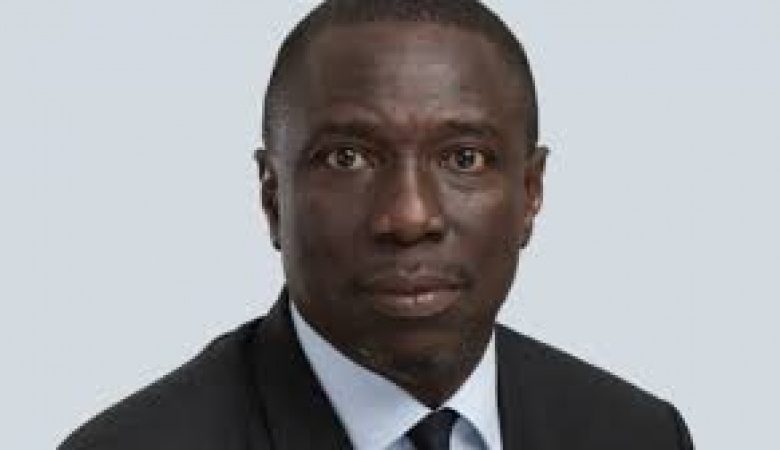

Ighodalo, who quoted the World Bank report which estimates that an additional one million people were pushed into poverty in Nigeria between June and November 2021, said a total of 8 million Nigerians were thrown into poverty in 2021.
He said: “The World Bank estimates that an additional one million people were pushed into poverty in Nigeria between June and November 2021, resulting in a total of about 8 million people being relinquished to poverty in 2021; and bringing our nation’s poverty headcount to about 91 million.
“That is 91 million Nigerians afflicted by the ‘poverty virus’, which is every bit as deadly and more infectious than SARS, COVID-19, judging by the numbers.”
It would be recalled that the National Bureau of Statistics (NBS) in May, 2020, said more than 82.9 million Nigerians were poor.
The Bureau in its report on Poverty and Inequality in Nigeria 2019, said 40.1 percent of the total population in Nigeria was classified as poor, which implies that an average four out of 10 individuals in Nigeria had real per capita expenditures below N137,430.00 in 2018.
Ighodalo also identified some factors responsible for worsening economic crisis and greatly threaten a full economic rebound in the country.
Such factors, according to him, include “multiple macroeconomic challenges, exchange rate volatility, fiscal constraints, market distortions, high inflation, an unattractive investment environment (with security concerns at the core of investor reticence) as well as infrastructure deficits.”
He called on the government to address these impediments with a sense of urgency, noting that the implementation of immediate economic reforms must be prioritised to promote higher productivity, achieve economic efficiency, and deepen inclusive development.
“Long-standing issues such as effective deregulation of the downstream oil and gas sector, foreign exchange scarcity and pricing, export promotion, enhanced revenue generation without dampening entrepreneurial drive, acceleration of economic diversification and patient quality investment into priority sectors such as agriculture, manufacturing, social (education & health), trade and information technology sectors, must be given the utmost attention in 2022,” he said.
Ighodalo, however, expressed reservations in the implementation of key reforms to turn around the fortunes of the nation, in view of the fact that 2022 is a pre-election year.
“Election-related distractions will likely have the effect of amplifying the challenges experienced in 2021 if the government does not immediately move to stem the tide by implementing critical reforms.
“We believe that policies that directly impact the welfare, gainful employment and safety of our citizens and the performance, sustainability and job-creating potentials of our businesses, in the short term, must be at the fore of government policies and actions in 2022.
“Being a pre-election year, 2022 will likely come with its peculiarities.
“First, increased election spending could motivate a tighter monetary policy stance to curb inflationary pressures.
“Secondly, attention may shift from effective governance to outright politicking.
“The pace of decision-making usually slows down in a pre-election year and reform pronouncements and implementation become difficult.
“Thirdly, the philosophical and political battles which will ensue as each party seeks to choose its presidential candidate and then convince the citizens that they are the party that will form the best government, may relegate focus on the economy and lead to the stagnation of our recovery,” he explained.
He, therefore, recommended that proactive and swift actions should be taken by the government in the implementation of various reforms, preferably in the first quarter of 2022.
As the political activities heighten, the chairman of NESG urged Nigerians to make careful choice with regard to various candidates and their political parties to forestall plunging Nigeria into further economic morass.
According to him, “As campaigns begin to kick off for the general elections in 2023, we must pay very careful attention to the candidates that the political parties present.
“We, the people of Nigeria, must carefully consider the capacities, track record and love of the country demonstrated by each of these candidates.
“We must only reward with our votes those parties that put forward knowledgeable reformers; reformers who are creative, passionate, courageous and have shown with evidence of their life’s work, a genuine love for the people of Nigeria.”
In his presentation, Mr. Laoye Jaiyeola, Chief Executive Officer of NESG, stressed the need for macroeconomic stability, improvement of the internally generated revenue (IGR) and addressing the nagging issue of fuel subsidy.
He pointed out that 40 percent of the population consumes three percent of the petroleum products, adding that the continued retention of subsidy in the budgetary allocation is not sustainable.
In his remarks, Senate President, Ahmad Lawal, commended NESG for developing the Macroeconomic Outlook Report, assuring that the National Assembly in partnership with the executive arm would implement the recommendations of the report.
Lawal, represented by Chairman, Senate Committee on Finance, Sen. Solomon Adeola, argued that the stupendous amount of money borrowed by the present administration has been channeled into legacy projects.


