2027: Opposition parties reject Atiku’s northern ticket push, back southern presidency

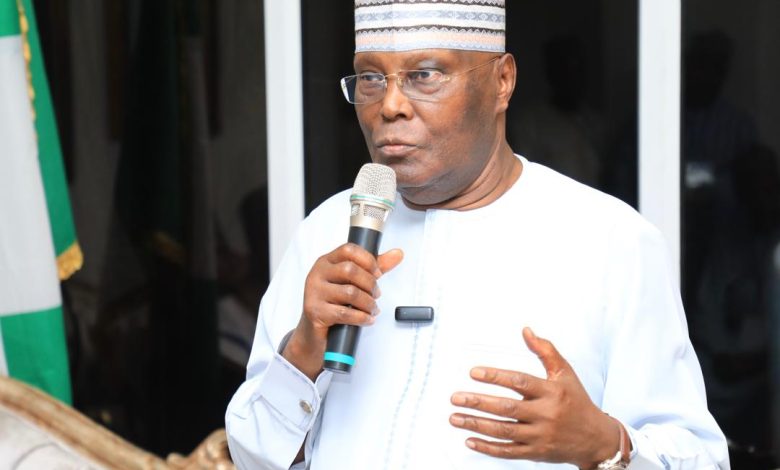

Fresh divisions have emerged within Nigeria’s opposition coalition ahead of the 2027 presidential election as major political parties and political movements openly rejected former Vice President Atiku Abubakar’s position that only a northern candidate can unseat President Bola Ahmed Tinubu.
The disagreement followed a statement issued by Atiku’s media aide, Olusola Sanni, warning opposition parties against zoning their presidential tickets to the South ahead of the next general election, reports The PUNCH.
According to the former vice president’s camp, history shows that no opposition candidate from the same geopolitical zone as an incumbent president has ever succeeded in defeating a sitting president in Nigeria.
“The first and most obvious question is this: how does a Southern opposition candidate realistically unseat a sitting Southern president? Nigerian political history offers no precedent for such an outcome,” the statement read.
Atiku’s camp further argued that by 2027, the South would have spent more years in power than the North since Nigeria’s return to democracy in 1999, insisting that retaining power in the South would deepen perceived regional imbalance.
However, the position immediately triggered strong backlash from several opposition parties and political groups, including the All Progressives Grand Alliance, Labour Party, Young Progressives Party, Social Democratic Party, New Nigeria People’s Party, the Nigeria Democratic Congress, as well as the Kwankwasiyya and Obidient Movements.
Most of the parties insisted that the presidency should remain in the South in the interest of fairness, equity, national unity and political stability.
Speaking on the controversy, APGA National Publicity Secretary, Ejimofor Opara, insisted that it remained the South’s turn to complete its tenure, arguing that President Tinubu was still defeatable despite Atiku’s political calculations.
“It is the turn of the South, and we strongly believe that every right-thinking northerner should support it,” Opara stated, adding that the emerging disagreement had already exposed cracks within the opposition coalition.
The Young Progressives Party also dismissed Atiku’s argument, insisting that competence and leadership capacity should matter more than regional considerations.
“There is nothing cast in stone that says President Bola Tinubu cannot lose to any candidate, whether from the South or North. What matters is the decision of Nigerians,” YPP spokesman, Wale Egbeola-Martins, said.
The Social Democratic Party also maintained that it could challenge the APC successfully with a southern presidential candidate, citing worsening economic hardship and insecurity as key issues likely to shape the 2027 election.
Similarly, the NNPP argued that Nigerians—not political elites—would ultimately determine who becomes president in 2027, though the party acknowledged the existence of an informal North-South power rotation arrangement.
The Kwankwasiyya Movement went further, describing Atiku’s position as “insulting” and capable of deepening regional divisions across the country.
“I believe Atiku is only talking for himself. It is like saying there is no qualified person in the South apart from him,” Kwankwasiyya spokesman, Habibu Muhammed, said.
The Labour Party also rejected Atiku’s political permutation, arguing that the 2023 election had already disproved the claim that a southern opposition candidate could not defeat another southerner.
Labour Party spokesman, Ken Asogwa, noted that despite having multiple southern candidates in the 2023 presidential election, Tinubu still emerged victorious, proving that regional calculations alone do not determine electoral outcomes.
Meanwhile, the Peoples Democratic Party maintained that zoning remained necessary for political stability and inclusiveness, insisting that the principle was originally introduced to reduce national tension and ensure balance.
The zoning debate has intensified amid ongoing opposition coalition talks involving key political figures such as Peter Obi and Rabiu Musa Kwankwaso, both of whom recently aligned with the Nigeria Democratic Congress as discussions over a united opposition front continue ahead of 2027.
Political observers say the growing disagreement over zoning, coalition strategy and regional balance could significantly shape opposition alliances and power negotiations ahead of the next presidential election.