

2025 Agric Budget: Stakeholders advocate strategic reduction in use of agro chemical
By Oswald Agwu, Abakaliki

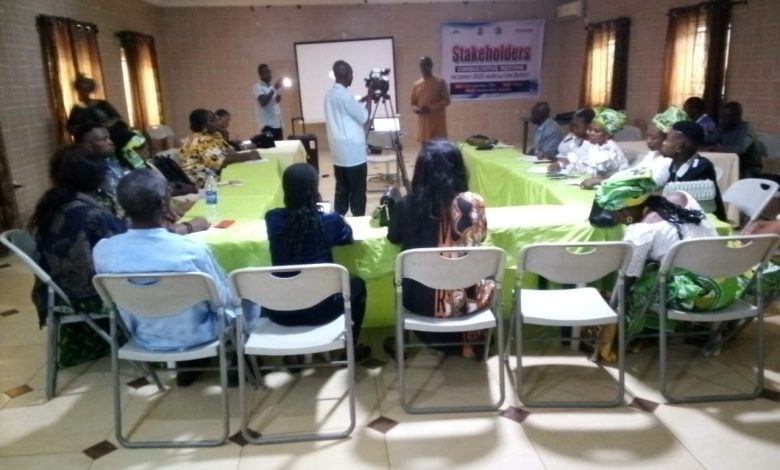

All levels of government in Nigeria have been urged to begin to develop a safe, sustainable food strategy that would ensure reduction to the lowest level, the use of highly synthetic chemicals in agriculture by 2050.
The call was contained in a communique raised at a one-day stakeholders consultative meeting on 2025 agriculture budget.
The event was held Tuesday in Abakaliki, Ebonyi State capital.
It was organised by a civil society organization, Participatory Development Alternatives, in conjunction with Ebonyi State Ministry of Agriculture, Budget Committee Group and Smallholder Women Farmers Organizations of Nigeria, SWOFON, Ebonyi state chapter.
PDA is implementing the Scaling Up Public Investment in Agriculture project in Ebonyi State, with support from Actionaid-Nigeria.
Part of the communique reads: “States should begin to develop pesticide policies and enforce the legislation that prohibits hazardous agrochemicals , and a significant shift made towards sustainable farm systems like agroecology.
“To achieve this, the government needs to develop a safe sustainable food strategy that reduces the use of highly toxic synthetic chemical pesticides by 50% by 2030, 25% by 2040 and a maximum of 5% by 2050.
The Smallholder Women farmers also urged government at all levels to increase public investment in Agriculture to enable strong support to be given to farmers in their transition towards agroecology.
They noted that increaed investment in agriculture will lead to increase in the agricultural GDP to at least 6% and help in ending the food insecurity in the country.
The communique further called on the State government and the House of Assembly to ensure timely consideration, passage, and timely budget releases and utilization as a strategic approach to increase food production, adding that such proactive actions were necessary to reduce hunger and poverty as well as achieve the Maputo/Malabo commitments of allocating at least 10 percent of the total budget to Agriculture.
It added: “Lawmakers should ensure that their proposed zonal intervention and constituency projects are agricultural and evidence-based to create meaningful impact in the communities.
“The state ministry of agriculture and other departments and agencies should ensure wider stakeholder consultations in the budget formation, provide continued coordination and the implementation of the stakeholders consultative meeting on the agriculture budget annually at the local and state levels.”
The communique enumerated strategic areas of investments to include extension services, access to credit, women in Agriculture, youth in agriculture, appropriate labour-salving technologies, inputs, post – harvest losses reduction support, irrigation, climate resilient sustainable agriculture/ agroecology; research and development, monitoring and evaluation, as well as coordination.
In an opening remark, the project officer, PDA, Ugochi Joseph explained that the essence of the meeting was to review key areas in the 2024 budget as well as fashion out strategic ways of improving Agriculture in the 2025 budget.
She appreciated the state government for the improvement in budgetary allocation to Agriculture in 2024 which she said was above 4 percent but observed that it was still below average.
Joseph advocated for sustained increase towards meeting the desired target of 10%.
The State Commissioner for Agriculture and Natural Resources, Nkechinyere Iyioku-Ezeani, represented by a Permanent Secretary in the Ministry, urged SWOFON to get more involved in the budget process and putting their submissions in writing to Governor Nwifuru, who he described as passionate in improving Agricultural performance in the state.
The SWOFON State Secretary, Nnenna Nkama, in an interview, appealed to the state government to always release funds and inputs timely to their genuine members who constitute the largest proportion of farmers in the state.
Representatives of partner Civil Society Organizations, including Fortuna Okeh and Lorieth Nwafor advised the SWOFON to intensify advocacy and collaborations as a means of giving added strength to their demands from government.


