Opposition leaders raise alarm over Tinubu Govt’s plot to crush multiparty democracy, demand audit of public accounts


Senior opposition leaders on Sunday raised the alarm over what they described as a growing threat to Nigeria’s multiparty democracy, accusing the administration of President Bola Tinubu of weaponising anti-graft agencies to intimidate, weaken and ultimately annihilate opposition forces ahead of the 2027 general election.
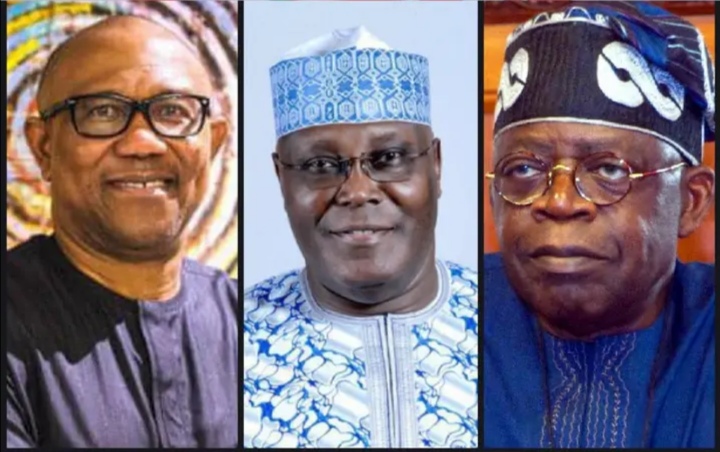
In a joint statement signed by former Vice President Atiku Abubakar, former Labour Party’s presidential candidate, Mr Peter Obi, ex-Senate President David Mark, former APC National Chairman John Odigie-Oyegun, Chief Bode George and Mallam Lawal Batagarawa, the leaders alleged that key state institutions — particularly the Economic and Financial Crimes Commission (EFCC), the Nigeria Police and the Independent Corrupt Practices and Other Related Offences Commission (ICPC) — were being deployed for political persecution rather than genuine anti-corruption efforts.
“We are witnessing an unfortunate and dangerous slide into a system where institutions of state are increasingly perceived as tools of political intimidation, selective justice and systematic persecution of opposition leaders,” the opposition figures said.
They warned that Nigeria was being steered towards a de facto one-party state through covert pressure on opposition governors and political actors, rather than through transparent electoral contests.
“Across the country, there are mounting concerns that state power is being used not to prevent economic crimes, but to coerce opposition governors and leaders into submission and defection,” the statement said, adding that recent defections to the ruling All Progressives Congress (APC) had deepened public suspicion of intimidation through the anti-corruption apparatus.
According to the opposition leaders, the alleged strategy goes beyond governors and is aimed at dismantling emerging opposition coalitions ahead of the 2027 elections.
“This project, if allowed to continue unchecked, poses a grave danger to Nigeria’s democratic future,” they warned.
Alleged Weaponisation of EFCC
The leaders accused the EFCC of operating a pattern of selective prosecution that favours members of the ruling party while aggressively pursuing opposition figures, often through what they described as “media trials.”
They cited remarks previously credited to a former APC National Chairman, Adams Oshiomhole — that once defectors joined the ruling party “all your sins are forgiven” — as emblematic of what they called the public perception of double standards in the fight against corruption.
“The legitimacy of the anti-corruption war is being eroded when glaring allegations against ruling party officials are ignored, while even unsubstantiated claims against opposition figures are pursued with zeal,” they said.
They pointed to cases of former ministers who resigned under public pressure over serious allegations but, months later, had neither been charged nor arraigned, despite the gravity of the accusations.
“This selective enforcement undermines public trust and damages the credibility of institutions designed to safeguard Nigeria’s economic integrity,” the statement added.
Demands for Far-Reaching Reforms
As part of their demands, the opposition leaders called for the immediate depoliticisation of the EFCC and a return to its statutory mandate as outlined in Sections 6 and 7 of its enabling Act.
“The EFCC must not serve the whims and caprices of any President, party or political faction,” they said.
They also proposed embedding anti-graft operatives directly into government payment and expenditure processes at the federal, state and local government levels, arguing that prevention — not selective prosecution — should be the cornerstone of anti-corruption efforts.
Beyond that, the opposition leaders demanded the establishment of an independent review body to examine public accounts of the federal government, all states and all local governments from 2015 to 2025.
The proposed body, they said, should be chaired by “an eminent judge” and include representatives from civil society organisations, the Nigerian Bar Association, professional accounting and banking bodies, the Nigerian Financial Intelligence Unit, security agencies and all political parties represented in the National Assembly.
“Such a review will expose the pattern of selective prosecution and reveal how many officials of the federal and ruling-party-controlled states were shielded from accountability due to political affiliation,” they argued.
Warning Ahead of 2027
The opposition leaders cautioned that the continued erosion of institutional independence could plunge the country into political instability as the next election cycle approaches.
“The President must recognise that evident social and political injustice could snowball into mayhem,” they warned.
They also disclosed plans to engage Nigeria’s international partners, including the United States, United Kingdom, European Union, United Nations and the World Bank, over what they described as the growing politicisation of Nigeria’s anti-graft agencies.
“Our democracy is under threat through the deliberate and systematic weakening of opposition forces,” the statement said.
Quoting Edmund Burke and Martin Luther King Jr., the leaders urged Nigerians across party, ethnic and religious lines to resist what they described as a silent drift toward authoritarianism.
“Nigeria belongs to all of us — not to a single party or a single leader,” they declared.