BREAKING: Panic in Aso Rock as US Senate moves against Nigerian governors, judges [FULL DETAILS]

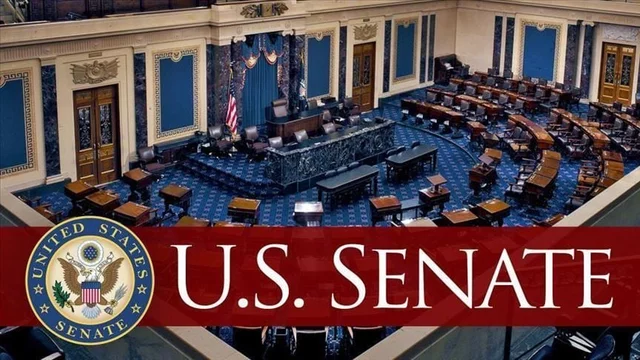

A new bill currently moving through the United States Congress has placed Nigeria under intense international scrutiny, with far-reaching sanctions proposed for Nigerian political officeholders, judges, and even security officials accused of enabling religious persecution.
The legislation, sponsored by Republican Senator Ted Cruz, is titled the ‘Nigeria Religious Freedom Accountability Act of 2025’ and has passed its second reading in the US Senate, reports Naija News.
It has now been formally referred to the Senate Committee on Foreign Relations, marking a major step in what could become one of America’s toughest policy positions toward Nigeria in decades.
The bill is a follow-up to House Resolution 594, already backed by 18 Republican members of the US House Committee on Foreign Affairs.
The draft legislation relies heavily on reports from major international bodies and watchdogs, including the Open Doors World Watch List 2025. The report claims:
These alarming numbers form the backbone of Senator Cruz’s justification for urgent legislative action.
In his words: “Religious persecution and violence against Christians and other religious minorities in Nigeria is endemic, driven in significant part by Islamist jihadism and institutionalised sharia law in large parts of the country.”
Senator Cruz said he expects the US Congress to move the bill “expeditiously.”
Bill Seeks to Declare Nigeria a ‘Country of Particular Concern’
One of the most consequential provisions in the bill is the directive to the US Secretary of State to officially designate Nigeria as a ‘Country of Particular Concern’ (CPC) under America’s international religious freedom laws.
If approved, this designation would immediately trigger mandatory sanctions related to:
US military cooperation
Equipment and arms sales
US economic assistance
Training and intelligence collaboration
Nigeria would also be placed under annual monitoring, with Washington required to publish a public list naming:
Officials, judges, security agents, and non-state actors linked to religious killings
Individuals who enforce or support blasphemy laws
Actors involved in the harassment or imprisonment of minorities
The first list must be published within 90 days, and yearly thereafter.
Bill Targets 12 Northern States Over Blasphemy Laws
The draft law explicitly mentions 12 states operating Islamic legal systems, claiming that their blasphemy laws violate global religious freedom standards.
The affected states are: Bauchi, Borno, Gombe, Jigawa, Kaduna, Kano, Katsina, Kebbi, Niger, Sokoto, Zamfara and Yobe State.
According to the bill, Nigeria must:
Amend or repeal such laws
Prosecute individuals involved in religious killings
Dismantle extremist networks
Otherwise, the country will remain on the CPC blacklist indefinitely.
Judges, Governors, Prison Officials May Face Sanctions
Naija News reports that the proposed penalties are unprecedented. If passed, the law would allow the US government to impose visa bans, asset freezes, and criminal restrictions on:
Governors of states where religious killings occur
Judges and magistrates involved in blasphemy trials
Police and prison officials who enforce controversial religious laws
State and non-state actors complicit in violence or neglect
The bill specifically mentions sanctions against anyone who: “Prosecutes, convicts, imprisons, or otherwise deprives individuals of their liberty on charges of blasphemy.”
This includes cases already publicly known, such as the death sentences, mob attacks, and imprisonments linked to blasphemy allegations in parts of the North.
Before the bill advanced, a US House Subcommittee on Africa held hearings where Nigerian religious leaders, activists, and international observers described disturbing scenes from:
Plateau
Benue
Southern Kaduna
Witnesses told lawmakers that communities live under “nightly siege,” with farms destroyed, homes burnt, and villagers killed or kidnapped by armed groups labelled as “bandits” locally.
However, US law categorises such actions as terrorism when they target civilians for ideological or political purposes.
Meanwhile, China, one of Nigeria’s strongest diplomatic partners, has openly criticised the bill.
Chinese Foreign Ministry spokesperson, Mao Ning, said: “As Nigeria’s strategic partner, China firmly opposes any country using religion or human rights as an excuse to threaten other nations with force.”
The statement signals geopolitical tension, as both the US and China currently compete for influence across Africa.
Potential Impact If the Bill Passes
If enacted, experts say the bill could:
Restrict US military sales and financing to Nigeria
Limit joint training and intelligence sharing
Impose visa bans on top Nigerian politicians
Affect Nigeria’s access to US defence and development programmes
Strain diplomatic relations with Washington
Nigeria would only be removed from the CPC list after the US verifies:
A significant reduction in anti-Christian killings
Dismantling of extremist networks
Revisions to blasphemy laws
Transparent prosecution of offenders
Path to Becoming Law
For the bill to become law, it must go through:
Review and amendment by the Senate Foreign Relations Committee
Approval by the full Senate
Passage of a similar bill in the House of Representatives
Reconciliation into a single document
Forwarding to the US President
Presidential signature or veto
A possible two-thirds override of any veto
Given that Republicans hold 52 seats in the Senate and control the House, it is believed that the bill has a strong chance of passing.