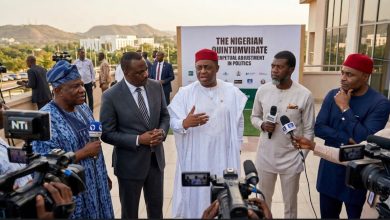
Nigeria’s democracy has always been fragile, but what is unfolding in Rivers State is not just another political squabble—it is a calculated power play that risks undermining the very foundation of federalism. There was no genuine need for an emergency rule in Rivers. The state’s challenges were political, not existential, and could have been addressed within constitutional limits. Yet, the Federal Government imposed Tony Okocha Ibas as sole administrator, conveniently tasked with conducting local government elections.
The real motive was simple: to ensure APC’s grip on the grassroots ahead of 2027, securing a path for President Bola Ahmed Tinubu’s second-term ambition.
The Grassroots as the Real Battleground
Since 1999, control of local government has been the hidden lever of power in Nigeria’s political machinery. Whoever controls the councils controls patronage, mobilization, and legitimacy at the grassroots. Tinubu himself demonstrated this in Lagos, where his strategic creation of Local Council Development Areas (LCDAs), despite federal resistance, entrenched his influence far beyond his tenure as governor.
By orchestrating APC’s takeover of Rivers’ councils, Tinubu has applied the same Lagos model on a national scale. Governor Siminalayi Fubara, stripped of grassroots machinery, now faces the prospect of becoming a ceremonial leader—a governor in office but not in power.
Echoes of the Past: Power and Manipulation
Tinubu’s maneuver in Rivers is not without precedent. Nigerian politics is littered with examples of leaders bending institutions to secure personal ambitions:
Olusegun Obasanjo’s Third Term Gambit (2006): Obasanjo attempted to alter the constitution to secure a third term, using federal might and inducements to sway lawmakers. Though it failed, it revealed how Executive overreach could threaten democracy.
Goodluck Jonathan and the Governors’ Revolt (2013): Jonathan’s strained relationship with some PDP governors—who later defected to the APC—showed how federal dominance could backfire. His inability to manage state-level autonomy weakened his presidency and paved the way for his 2015 defeat.
Muhammadu Buhari’s Suppression of Opposition (2015–2023): Buhari, though less flamboyant, presided over a system where opposition voices were systematically silenced, and electoral institutions often bent to serve ruling party interests.
Tinubu’s case is a continuation of this pattern, but with a unique twist: he has turned democratic institutions into props for a political telenovela, where every scene is staged to secure his hold on power.
Democracy or Telenovela?
What is happening in Rivers feels less like governance and more like a scripted drama. The sudden imposition of an administrator, the quick conduct of elections, the sidelining of the elected governor—all play out like episodes of a soap opera. Tinubu has reduced democracy to spectacle, where power is pursued as performance rather than responsibility.
But Nigeria is not a movie set. Each manipulation deepens public cynicism, erodes trust in the ballot, and delegitimizes governance. If the people of Rivers believe their votes no longer matter, what will stop voters in Kano, Enugu, or Zamfara from feeling the same?
Fubara’s Dilemma: Master in Hell or Slave in Heaven?
If I were Governor Siminalayi Fubara, I would seriously reconsider returning to office under the present arrangement. The recent manipulation of Rivers’ grassroots politics has left him weakened, his authority hollowed out. To return now is to accept the role of a figurehead—present in Government House but absent in power.
As John Milton wrote in Paradise Lost: “It is better to reign in Hell than to serve in Heaven.” Translated into today’s political reality, it is better to fight with dignity in opposition, even in difficult terrain, than to preside over a government where others pull the strings.
By surrendering to this script, Fubara risks becoming the symbolic governor of Rivers State while real power resides with those who engineered the “emergency.” The true test of leadership may not be in clinging to office at all costs, but in choosing principle over political stagecraft.
The Danger of Precedent
The most dangerous aspect of Tinubu’s Rivers gamble is the precedent it sets. If the president can strip a sitting governor of grassroots power under the pretext of “stability,” then no state is safe from federal overreach. Tomorrow, another president may use the same playbook in any state deemed politically “strategic.”
This is how democracies die—not with a sudden collapse, but through gradual normalization of authoritarian shortcuts.
Conclusion
The Rivers saga is bigger than one state; it is a test of Nigeria’s democratic resilience. Tinubu may have secured a tactical victory for APC, but he has weakened the moral foundation of governance. By turning democracy into a telenovela, he risks scripting Nigeria’s future as a tragedy with no happy ending.
History is unforgiving to leaders who place ambition above institutions. Obasanjo’s third term bid collapsed under public resistance. Jonathan’s overreach alienated allies and ended his presidency. Buhari’s rigidity eroded goodwill.
Tinubu must remember: the same grassroots he is desperate to control today could rise tomorrow to write him out of Nigeria’s democratic script.
The people of Rivers—and Nigerians everywhere—deserve leadership, not manipulation; governance, not theatre.