Nyesom Wike’s Imperial Tendencies: Power, hubris and future of Nigerian politics
By Obioma Ogbonnaya

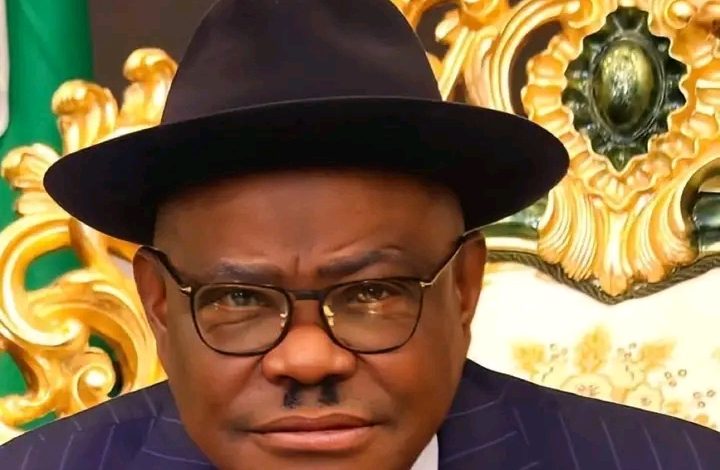

Nyesom Wike, the current Minister of the Federal Capital Territory (FCT), has never avoided controversy. His political trajectory, marked by both undeniable achievements and deeply troubling excesses, has consistently placed him at the epicenter of national discourse. However, his recent remarks, particularly his dismissive and possibly condescending assessment of Peter Obi’s future presidential prospects, serve as a stark reminder of the dangers of unchecked power and the corrosive influence of hubris in Nigerian politics. Wike’s actions increasingly suggest a belief in his own infallibility, a dangerous delusion that jeopardises the very foundations of democratic principles and civil political discourse.
His statement, delivered with characteristic bluntness during a Thanksgiving service on July 6, 2025, was more than just political commentary. It was a declaration, a proclamation from a man who appears to believe he has the authority to single-handedly decide the fate of others in politics.
Declaring that “Peter Obi cannot be president again; his time has passed” is more than an opinion; it is an attempt to preempt the democratic process, silence opposition, and impose his own will on the Nigerian people.
This is not an isolated case. Wike’s career has been punctuated by instances where his words and actions have bordered on the tyrannical. He has cultivated a persona that thrives on confrontation, often resorting to inflammatory rhetoric and personal attacks against his political opponents.
The reported use of “disgusting and unprintable things” is indicative of a pattern of behaviour that degrades the political landscape and undermines the principles of civility and respect that are essential for a healthy democracy.
The core issue here is not simply about Wike’s personal style; it’s about the abuse of power and the erosion of democratic norms. When a powerful figure like Wike believes himself to be above reproach, when he acts as if he is the sole arbiter of political legitimacy, and when he feels entitled to dictate the political destinies of others, it creates a climate of fear and discourages genuine political engagement.
This is particularly concerning in a nation still grappling with the legacy of authoritarianism and striving to consolidate its democratic institutions.
The accusations levied against Peter Obi, specifically his alleged inconsistency and criticism of the democratic process after losing power, are particularly ironic coming from Wike. As a former governor with a history of controversial actions during elections, including allegations of manipulating results and undermining the will of the electorate, Wike’s pronouncements ring hollow. It is as if he believes himself immune to the same scrutiny and accountability he demands of others. This hypocrisy is not lost on the Nigerian public, and it further erodes trust in the political class.
The reference to Wike’s past actions as governor, “cancelling and altering election figures and results,” underscores the serious concerns about his commitment to democratic principles. These are not mere allegations; they are serious accusations that, if true, represent a profound betrayal of the trust placed in him by the people. To then position himself as a judge of another politician’s democratic credentials is not only hypocritical but also deeply cynical. It suggests that power, for Wike, is not a tool for serving the people but a weapon for silencing dissent and consolidating his own influence.
Furthermore, Wike’s penchant for “backing down” after making inflammatory statements, while his supporters cheer him on, reveals a calculated strategy of provocation and manipulation. It allows him to test the boundaries of acceptable discourse, to gauge public reaction, and to maintain a constant state of political tension. This approach, while perhaps effective in the short term, ultimately damages the fabric of Nigerian society and undermines the possibility of constructive dialogue.
The potential ramifications of Wike’s behaviour extend far beyond the immediate political squabbles. His actions contribute to a climate of impunity, where powerful individuals believe they are not accountable for their words or deeds. This, in turn, can embolden others to engage in similar behaviour, further eroding trust in the government and its institutions. The long-term consequences for Nigeria’s democratic development could be devastating.
The assertion that Wike “believes that people in Abuja and Rivers State should remember those who attempted to play God” is a particularly revealing observation. It suggests that Wike views his actions as a form of divine retribution, a righteous punishment for those who have crossed him. This sense of self-importance and moral superiority is deeply troubling and underscores the dangers of allowing unchecked power to corrupt.
Ultimately, Wike needs to engage in a serious period of self-reflection. He needs to examine his attitude towards people, his use of power, and his impact on the Nigerian political landscape. He needs to recognize that his actions have consequences, not just for his political opponents but for the entire nation.
The future of Nigerian politics depends on the ability of its leaders to rise above personal ambition and embrace the principles of democracy, accountability, and respect. It requires a commitment to dialogue, compromise, and the recognition that no single individual, regardless of their power or influence, has a monopoly on truth or righteousness.
Nyesom Wike has a choice to make. He can continue down the path of hubris and authoritarianism, or he can choose to embrace a more constructive and collaborative approach to politics. The future of Nigeria may well depend on the choices he makes.
The citizens of Nigeria deserve a political landscape where leaders are humble servants of the people, not self-proclaimed deities dispensing judgment and determining destinies based on their own inflated sense of self-importance. It is time for Nyesom Wike to take a long, hard look in the mirror and decide what kind of legacy he wants to leave behind.
He needs to remember that true leadership lies not in wielding power, but in serving the people with humility, integrity, and a genuine commitment to the principles of democracy. Only then can he begin to repair the damage he has inflicted on the Nigerian political landscape and contribute to a more just and equitable future for all.