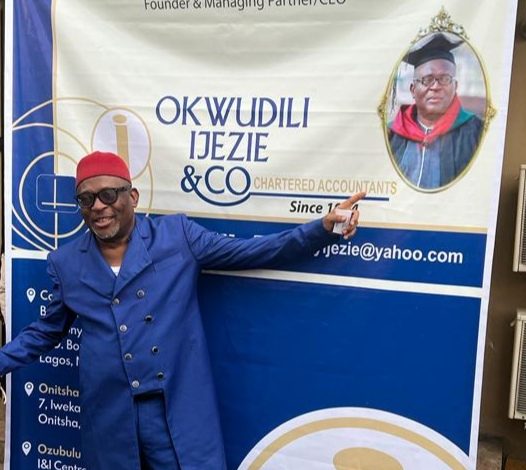
New tax regime, paving the way for the journey ahead, By Chief Okwudili Ijezie


“If you don’t like the road you’re walking, start paving another one.”
— Dolly Parton.
According to Tony Robbins, “The only impossible journey is the one you never begin.”
“What defines us is how well we rise after falling.”
Absolutely right. Rising after falling is constantly to be universal truth of life.
“Truth is like the sun. You can shut it out for a time, it ain’t goin’ away,” said Elvis Presley.
The truth is that without revenue, government cannot provide adequate social services to the people it is entrusted to serve.
“Taxes, after all, are the dues that we pay for the privileges of membership in an organized society,” according to Franklin D. Roosevelt, former President of the United States of America.
Oliver Wendell Holmes, Justice of the United States Supreme Court in 1904 added, “Taxes are the price we pay for civilization.”
“The story of Joseph in Egypt and of the seven fat and lean years has passed into the homely wisdom of the years; but our economic thinking seems to have lost contact with so simple and basic approach to prudent management of a nation’s welfare.”
With the above quote from the immortal Professor Benjamin Graham, the mentor of my mentor, Warren Buffett, the Oracle of Omaha, I am delighted this morning to welcome you all and thank you for your kind acceptance of my invitation to attend this National Tax Conference.
Nigeria ranks very low on the global case of paying taxes while the country’s tax-to-GDP ratio is one of the lowest in the world and well below the African average.
This has led to an over reliance on borrowing on borrowing to finance public spending which in turn limits the fiscal space as debt service costs consume a greater portion of government revenue, annually resulting in a vicious cycle of inadequate funding for socio-economic development.
According to President Bola Tinubu, “The consequences of the ongoing failure of our tax regime are real and significant. The inability of the government to efficiently raise revenue has led directly to an over reliance on borrowing to finance public spending.”
“A government that cannot properly fund itself will also lack the flexibility or fiscal scope to sensibly manage the economy or respond to external shocks.”
The ultimate measure of a man is not where he stands in moments of comfort and convenience, but where he stands at times of challenge and controversy.
Blakey Ijezie knowing that “When we are dreaming alone it is only a dream. When we are dreaming with others, it is the beginning of reality,” according to Dom Helder Camra, set out to organize this National Tax Conference, as he subscribed to George Lopez dictum that “When things are bad, it’s the best time to reinvent yourself.” This is in line with his strategy of ensuring that all hands are on deck to realize this humongous ambition — increasing the tax-to-GDP ratio from 10.86% to 18% in the next three years. It needs the support of all and sundry.
• To improve the tax revenue to GDP ratio, tax collection must grow faster than GDP.
• A pragmatic way to boost the tax-to-GDP ratio is through improvement in the fiscal system.
• To truly raise tax revenue, government must adopt a broad base approach that simplifies the tax system, encourages voluntary compliance, expands the tax base and sanctions defaulters regardless of their status in the society.
• To promote a tax paying culture, a good starting point is to ensure that everybody who is aspiring for a political office should be screened for full tax compliance.
The Presidential Committee on Fiscal Policy and Tax Reforms reflects President Bola Tinubu’s commitment to addressing these challenges and bringing about transformative reforms in fiscal policy and taxation. It’s hinged on his promise to remove all barriers impending business growth in Nigeria.
The Committee, chaired by Mr. Taiwo Oyedele, former Fiscal Policy Partner and Africa Tax Leader at PwC Nigeria, PricewaterhouseCoopers, has responsibility for the various aspects of tax law reform, fiscal policy design and coordination, harmonization of taxes and revenue administration.
According to Ben Okri, “The magician and the politician have much in common: They both have to draw our attention away from what they are really doing.”
Yes, indeed, President Bola Tinubu is seemingly trying to take away our attention from what he is really doing with the Fiscal Policy & Tax Reforms Committee. We will seek to unmask it at this National Tax Conference. And all for free (pro bono), courtesy of Okwudili Ijezie & Co. (Chartered Accountants), the organizers of this Conference. It’s in line with its Corporate Social Responsibility (CSR).
If you ask me, our next move should be to really open our eyes and focus on this audacious Fiscal Policy & Tax Reforms Program of President Bola Tinubu. If we ignore making our inputs to the work of the Committee, when he starts implementing the recommendations of the Committee, we will certainly start another round of lamentations.
Permit me at this point to curate the 10* most frequently asked questions about the Presidential Fiscal Policy and Tax Reforms Committee.
Q1 – What exactly is the Presidential Fiscal Policy & Tax Reforms Committee set up to do?
A1 – The committee was set up by President Bola Tinubu to review and redesign Nigeria’s fiscal system with respect to (1) revenue mobilisation, both tax and non-tax (2) quality of government spending and (3) sustainable debt management. In addition, the committee will identify relevant measures to make Nigeria an attractive destination for investment and facilitate inclusive economic growth.
Q2 – What is the timeframe for the committee’s assignment?
A2 – The work of the committee is expected to be completed within one year divided into 3 milestones (1) Quick Wins within 30 days focusing on urgent interventions to cushion the effect of current socio-economic challenges (2) Critical Reforms within 6 months including measures to address multiplicity of taxes, simplify the tax laws, ensure policy coordination, drive accountability and transparent reporting (3) Implementation of structural revenue reform measures and critical fiscal policy changes.
Q3 – Is the committee’s mandate limited to only the federal government?
A3 – No. The committee will work with all levels of government as critical stakeholders to ensure effective collaboration in the design and implementation of necessary fiscal policy changes and localisation of reforms at the subnational level as may be applicable.
Q4 – Who are the members of the committee and what was the basis for their selection?
A4 – Members of the committee are drawn from a diverse pool of eminently qualified Nigerians across all geopolitical zones, age brackets, religion, and gender. They represent the private sector including trade associations, small businesses, civil society, and professional bodies as well as public sector institutions at federal, states and local government levels.
Q5 – How can the public contribute to the work of the committee?
A5 – The committee will open channels of communication and platforms for submission of inputs by the end of September 2023. In addition, we have outlined various stakeholder engagement sessions with Nigerians from all walks of life including people living with disabilities, artisans, Nigerians in the diaspora, multinational companies, international investment community and so on. Everyone who has something to say will be heard.
Q6 – Should we expect more taxes and frequent changes to the tax laws?
A6 – We do not intend to introduce new taxes or impose higher tax rates. Rather, our mandate is to reduce the number of taxes and levies while harmonising revenue collection to reduce the burden on the people and businesses. The objective is to avoid taxing investment, capital, production or poverty. We plan to review and re-enact the major tax laws in a holistic manner thereby limiting the necessity for frequent changes through annual finance acts.
Q7 – How does the committee intend to achieve a tax to GDP ratio of 18% within the next 3 years?
A7 – The average tax to GDP ratio for Africa excluding Nigeria is about 18%. This is the basis for the target of 18% and the estimated tax gap of N20 trillion. There is a huge opportunity to generate revenue by leveraging technology and tax intelligence to close the tax gap. In addition, we will rationalize incentives, reduce the cost of collection, and optimise revenue from government assets and natural resources. This way we can generate more revenue without introducing new taxes.
Q8 – Is it true that agencies with revenue collection functions will be stopped from collecting revenues and merged with the FIRS?
A8 – No agency has been stopped from collecting revenue as many of them are empowered to do so by law. However, many of the agencies would rather focus on their primary functions hence we intend to harmonise the fragmented revenue collection functions into one agency for each government. This is the case in many countries including the leading tax regimes in Africa. This reform will help to improve efficiency and enable the agencies to focus on their primary mandates for the overall benefit of the economy.
Q9 – Can we trust the government to implement the committee’s recommendations or is this just another committee?
A9 – The committee was set up not just to advise the government but also to support the implementation of recommended reform measures. The committee’s assignment is being carried out to the highest degree of independence driven by national interest within the context of modern-day economic realities and emerging issues within the international community.
Q10 – How can we stay informed with the activities of the committee?
A10 – Members of the public and other stakeholders can follow our activities on social media, fiscalreformsng on X, LinkedIn, Instagram, Facebook and via our YouTube channel. We will provide regular updates via our dedicated website and press releases. You can also reach us via email at enquiries@fiscalreforms.ng or via WhatsApp chat on +234 810 975 3151.
Signed
Taiwo Oyedele | Chairman, Presidential Fiscal Policy and Tax Reforms Committee
September 2023.
“Knowledge is of no value unless you put it into practice,” according to Anton Chekhov.
According to Analole France, “To accomplish great things, we must not only act, but also dream; not only plan, but also believe.” He further said that “Dreams are like stars… You may never touch them, but if you follow them, they will lead you to your destiny.”
According to Zadok Rabinowitz, “A man’s dreams are an index to his greatly.”
Gail Devers admonishes us to “Keep your dream alive. Understand to achieve anything requires faith and belief in yourself, vision, hardwork, determination, and dedication. Remember that all things are possible to those who believe.”
The Committee will not only advise the government on necessary reforms, but will also drive the implementation of such recommendations in support of the comprehensive fiscal policy and tax reform agenda of the Administration.
These efforts will not only improve Nigeria’s revenue profile but also create a more conducive and internationally-competitive environment.
The importance of a sound fiscal policy environment and an effective taxation system for the functioning of the government and the economy is imperative.
•HOW DO WE MOVE TAX-TO-GDP RATIO IN NIGERIA FROM 10.86% TO 18% IN THE NEXT 3 YEARS?
The KEY QUESTIONS we need to answer at this National Tax Conference include the following:
1. How does Nigeria compare to the rest of the world in terms of tax-to-GDP ratio?
2. Why does Nigeria rank so low in tax-to-GDP ratio?
3. What are the hallmarks of a good tax system?
4. How do we curb tax evasion in Nigeria?
5. Where do we go from here?
6. What is the Way Forward?
I see the setting up of the Taiwo Oyedele Fiscal Policy & Tax Reforms Committee as one of the best moves by President Bola Tinubu since he ascended the Aso Rock Villa on May 29, 2023. To at least tackle the dwindling revenues acceuabke to the Federation account. I am passionate about taxation, and I have volunteered my services, pro bono (free of charge), to assist in this direction, via this National Tax Conference. Let every other Nigerian play in his or her circle of competence, so that the future will be rosy for us all.
Tax-to-GDP ratio is a measure of a nation’s tax revenue relative to the size of its economy as measured by Gross Domestic Product (GDP). The ratio is used to assess the health of a country’s tax system and underscore its tax potential. It is the ultimate measure of the effectiveness of a nation’s tax system compared to other countries.
Nigeria revised its tax-to-GDP ratio for 2021 to 10.86% from 6% in May 2023 following an adjustment to include revenues collected by other government agencies. Tax collection rates have hovered between 5% to 6% of Gross Domestic Product (GDP) over the past 12 years.
The revenues collected by other agencies were previously left out of the calculation. These included those collected by Customs and State Internal Revenue agencies. This situation was peculiar to Nigeria as most other countries operated harmonized tax system with single-point tax revenue reporting. Hence that all relevant tax revenues are included in the computation of the tax-to-GDP ratio of those countries.
Nigeria’s tax-to-GDP ratio should ordinarily be higher than 10.86% but for the 2014 GDP rebasing of the economy that has worsened the tax ratio, coupled with certain economic and fiscal policy factors, including the impact of tax waivers contained in our various tax laws (including exemptions to micro, small and medium enterprises brought-in by Finance Act, 2019), low tax morale, and leakages occasioned by the country’s fragmented tax system.
• The tax-to-GDP ratio is a measure of a nation’s tax revenue relative to the size of its economy.
• Tax-to-GDP ratio is calculated by dividing the tax revenue of a specific time period by the GDP.
• This ratio is used with other metrics to determine how well a nation’s government directs its economic resources via taxation.
• Developed nations typically have higher tax-to-GDP ratios than developing countries.
• Higher tax revenues mean a country is able to spend more on improving infrastructure, health, and education — keys to the long-term prospects for a country’s economy and people.
• According to the World Bank, tax revenues above 15% of a country’s GDP are a key ingredient for economic growth and, ultimately, poverty reduction.
• Nigeria’s Tax-to-GDP ratio for the last twelve years, up to 2021, are as follows:
2021 10.86%
2020 8.40%
2019 10.20%
2018 10.36%
2017 9.02%
2016 8.28%
2015 9.78%
2014 13.21%
2013 13.87%
2012 16.25%
2011 19.98%
2010 15.28%
Source: National Bureau of Statistics (NBS).
The aim of this National Tax is for experts to brainstorm on how best to transform the nation’s tax system for sustainable development.
These experts will include:
CHAIRMAN: Mr. Kenneth Odusanya, FCA.
Managing Partner, Kenneth Odusanya & Co. (Chartered Accountants).
KEYNOTE SPEAKER: Chief Blakey Ijezie, FCA. Managing Partner, Okwudili Ijezie & Co. (Chartered Accountants).
GUEST SPEAKERS:
1. Professor Friday Ndubuisi, Professor at the Department of Philosophy, University of Lagos. Pioneer & Immediate Past Vice Chancellor Christopher University, Mowe, Ogun State.
Topic: TAXATION AND PUBLIC SERVICES.
2. Dr. Tunji Adeniyi, B.Sc, M.Sc, MBA, Ph.D.
Founder & Coordinator of Tunji Adeniyi& Associates Limited, a cross-cultural and multi-sectoral Consulting organization.
Former Hon. Commissioner of Finance, Budget & Economic Planning, Ekiti State; as well as former Managing Director of UBA Kenya Bank Limited.
Topic: TAX, VALUE, AND JOB CREATION IN NIGERIA.
3. Pastor Felix Jarikre.
Public Affairs Analyst.
Topic: TAXATION AND CORRUPTION.
The Theme of the National Tax Conference is Nigeria Tax Reform: Challenges & Prospects.
The Conference is the brainchild of Chief Blakey Ijezie, B.Sc, FCA, FCTI, FIMC, CMC.
Managing Partner, Okwudili Ijezie & Co. (Chartered Accountants), since January 1994.
Email: blakeyijezie@yahoo.com
Ijezie has been a frontline advocate of changing the narrative by improving the nation’s tax system.
Ahead of the commencement of Implementation of the Finance Act 2019, his firm of chartered accountants and tax practitioners organized a two-day seminar in January 2020, to help educate Nigerians on the new law.
The seminar with the theme, “Finance Act 2019: Underlying Challenges and Procedures to Counter Such Challenges,” at Sheraton Lagos Hotel, Ikeja, had Dame Olajumoke Simplice, then President/Chairman of Council, Chartered Institute of Taxation of Nigeria (CITN) as the Keynote Speaker, and Chief Preye Ogriki, pioneer Commissioner for Finance and Economic Planning, Bayelsa State, as the Chairman, among other eggheads.
Earlier in August 2019, the firm organized a seminar with the theme, “Challenges & Strategies for Improving transparency, efficiency and effectiveness of Internally Generated Revenue (IGR),” at Sheraton Lagos Hotel, Ikeja. It had Mr. Ayo Subair, Executive Chairman, Lagos State Internal Revenue Service as the Keynote Speaker, and Sir Okey Moka, former Executive Chairman, Anambra State Internal Revenue Service as well as former Commissioner for Finance, Anambra State, as the Chairman of the two-day seminar, among other eggheads. Notably was Chief Mark Anthony Dike, former President/Chairman of Council, Chartered Institute of Taxation of Nigeria (CITN), as well as President/Chairman of Council, West African Union of Tax Institutes (WAUTI). He retired as an Executive Director, Federal Inland Revenue Service (FIRS).
The Key Challenges In Nigeria’s Tax System include:
1. High prevalence of tax evasion.
2. Low tax morale.
3. Poor accountability in the utilization of tax revenue.
4. High cost of revenue administration.
5. Lack of coordination between fiscal and economic policies.
6. Fragmented and complex tax system.
7. Multiple taxes and revenue collection agencies.
The Primary Objective Of The Fiscal Policy & Tax Reforms Committee is to
enhance revenue efficiency, ensure transparent reporting, and promote the effective utilization of tax and other revenues to boost citizens’ tax morale, foster a healthy tax culture, and drive voluntary compliance.
The broad assignments of the Fiscal Policy & Tax Reforms Committee include:
• Achieving a minimum of 18% of the Tax-to-GDP ratio, in 3 years.
• Improving Nigeria’s Revenue profile.
• Harmonization of taxes.
• Transforming the Tax System.
Recall that the major aim of the Fiscal Policy & Tax Reforms Committee is “to transform the tax system to support sustainable development and achieve a minimum of 18 percent tax-to-GDP ratio within the next 3 years without stifling investment or economic growth.”
Currently, Nigeria has one of the lowest tax collection rates in the world at approximately 10.8 percent of Gross Domestic Product (GDP), though tax receipts did rise by 56 percent in 2022 to a record 10 trillion naira ($13bn).
On a cheery note, this one-day National Tax Conference is absolutely free of charge, pro bono. It is part of the Corporate Social Responsibility (CSR) arm of Okwudili Ijezie & Co. (Chartered Accountants), under Blakey Ijezie Foundation (Education, Mentoring, Advocacy). The Foundation was flagged off by Dr. Mansur Muhtar, the then Minister of Finance, Federal Republic of Nigeria, on Saturday, April 11, 2009, at Ozubulu, Anambra State.
“If you’re in the luckiest one percent of humanity, you owe it to the rest of humanity to think about the other 99 per cent•”
— Warren Buffett.
In conclusion, permit me to share the advices from my friends who assisted me in sharpening the focus of this KEYNOTE ADDRESS.
1. “The National Tax Conference should aim to come up with key tax issues and recommendations that can be forwarded to the Presidential Committee on Fiscal Policy & Tax Reforms, especially the industry perspective and options.”
— Otunba Ranti Omole, FCA.
2. “Our Tax Administrators need to be checkmated. The fraud they perpetuate by issuing fake tax clearance certificates and aiding other sharp practices by tax evaders need to be curtailed.”
— Mr. Gbarayorks Nuira Albert.
3. “The Nigerian Tax System is mainly Indirect Taxes like VAT, Sales Tax and Tariffs. My worry is the very thin line between Taxation and extortion. How can we formalize them Revenue from touts? How can we formalize tge Informal Sector that contributes 45% of the GDP in Nigeria?”
— Dr. Agu Onwuzuruoha.
4. “For you to have an effective tax system in place, you must create a conducive environment for businesses and job creation, you cannot tax people struggling to survive. For some of us, Institutional and structural defects in the system must be properly situated, especially the wastages and leakages.”
— Mr. Sunny Ikhioya.
5. “The Agberoo economies nationwide that politicians have deliberately maintained as parallel governments are tge easiest to mainstream. The amount generated by agberoos (aka NURTW) in most states that are unaccounted for can be as high as 20-30% of their annual budgets. Mainstreaming the urban transportation sector is not rocket science; it can be quickly executed.
It must be stated that an effective tax collection and monitoring system is a critical success factor. Also important is strict consequence of IRS (Internal Revenue Service) staff, adequately compensated on a performance based incentive scheme.
These are few low hanging opportunities for internally generated revenue to be significantly increased without increasing rates, if governments have the political will to act.”
— Mr. Aigbe Olotu, FCA.
•Being welcome and keynote address by Chief Okwudili Ijezie, FCA, Managing Partner/Chief Executive Officer, Okwudili Ijezie & CO. (Chartered Accountants), on the occasion of the National Tax Conference held on Tuesday, 10TH October 10, 2023 at Pholax Hotel & Suites, Anthony Village, Lagos