Business/Finance
Address security to make monetary, fiscal policies effective, varsity don urges FG, others

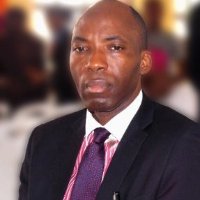

Professor of Business and Entrepreneurship, and Director, Centre for Enterprise and Human Capital Development, Crown-Hill University, Eiyenkorin, Kwara State, Nigeria, Prof. Muritala Awodun, has called on the Federal, state and local governments as well as other stakeholders to urgently address insecurity in many parts of Nigeria.
He noted that insecurity such as insurgency, farmers/herders’ clashes, terrorism, banditry, were impacted negatively on national economic development and foreign direct investment inflows.
Awodun who is also Chief Revenue Consultant to CSDC Consulting Enterprise Solutions and Tree Four Consult, while analyzing the monetary policies of the Central Bank and the fiscal policies of the Federal Government through the Ministry of Finance, stated that economy management is a holistic thing.
According to him, it transcends monetary and fiscal policies and extends to security.
Awodun said, “When you talk of the economy, it is holistic and cannot be micro-managed. So, we cannot be looking at one sector of the economy without considering what is happening in the other sectors. The whole thing works together. If the CBN is up and doing, that is the monetary side and the fiscal side is failing, the entire economy will fail. Also, if the fiscal side is up and doing and the monetary side is failing, then the entire economy will suffer for it. So, it is not for one sector of the economy to be performing while the other is not. It is a holistic thing when it comes to economy management. You must get the right people into the right positions and they have to work together as a team.
“We all saw how the economy was managed during the Obasanjo and Yar’Adua regimes. Crack economic team from the CBN, the monetary side, to the Ministry of Finance, the fiscal side, and the Economic Planning, you can see the synergy between and among them. You could see synergy, you could see them working together and managing the economy together. You could see holistic management of the economy but this particular situation that we find ourselves is something that we can say is not the same, because the yardstick of measuring their performances, and what the people will remember them for after they have long gone are, unfortunately, not looking positive, and that is the truth.
“It is easy to say ‘there is depression, there is this and there is that. There are solutions and policies appropriate to any situation even in economic theory. As a nation, we have not done enough. Sincerely, it just is not in our interest that the economy is like this. More or less, what we are doing is that we are managing, for now, we are not managing for the future. We are just solving problems of now, for instance, we have a problem of how to get money to spend, then we borrow just to fill that gap. We are digging a hole for tomorrow’s leaders to worry about, just to fill the holes we see today. Those are not lasting solutions and obviously not sustainable. Those are problems for those who are going to manage the economy tomorrow to solve.
He added, “The economy is a whole unit that we can liken to the human body with many visible and invisible parts determining how well it is with it. There is the body, the spirit, and the soul of the human, the same way it is with the economy. We concentrate so much on the physical with many visible parts while we pay less attention to the invisible spirit and soul. No matter how fine the face of a man may look or physically fit he may look, once the spirit is attacked, that good-looking man lies helpless until it is well with the spirit.
“The monetary and fiscal institutions saddled with the affairs of managing the economy and the different sectors of the economy are the physical body of the economy. However, the issue of security can be likened to the spiritual aspect, without which it cannot be well with the economy. The inability of the government to solve the security challenges of the country, all these years, will only continue to make a mess of whatever policy, monetary of fiscal, that these institutions may put in place. For as long as the political forces refuse to tackle head-on the insecurity problems, whatever policies or infrastructure put in place will only be disrupted and destroyed by the realities of insecurity.
“You build roads and rails, but the people are afraid of plying them because of insecurity. You build schools and hospitals and the people cannot access them because of insecurity. You promote and encourage agriculture by funding it massively but the people cannot access their farms and even when they do their harvests are destroyed because of insecurity. So, when the spirit and the soul of the economy is threatened, can it be well with the economy? While we liken the spirit with insecurity, the soul I will say is political because the moment we hold elections and hand over power to whoever is chosen, that political institution determines what happens to all the others, whether security or economy.”
The revenue consultant lamented that out of the 36 states, one can hardly count up to six states that can survive without federal allocation going by the figures of the internally generated revenue (IGR) of the 36 states of the federation.
He stated it is not that these other states cannot generate sufficient IGR but because they are solely dependent on the money that comes from the Federal sources which come with little or no effort and because it is barely adequate for them to pay salaries and do some other things, they tend to be contented with that status, adding that what if that federal allocations stop today, how are those other states going to survive?
Awodun, said all the states of the federation and FCT can self-sustaining if they develop and maximise their resources and IGR collection.
He, however, decried that none of the 36 states in Nigeria and the Federal Capital Territory, (FCT) Abuja, have reached their full potential in internally generated revenue collection.
Awodun, who is a former Chief Executive Officer of Kwara State Internal Revenue Services, urged the 36 states of the federation and FCT to develop the resources in their domains and optimise their IGR collection for sustainability rather than depend on federal allocations.
He said, “All the 36 states of the Federation including the FCT have not reached their full potential. The six states that are said to be doing well can still do far better based on the revenue potentials of those states. They are being appraised as having done well only compared to where they are coming from. The Federal Government, in terms of revenue generation, can do a lot better than what they are doing now, so can all the 36 states. Those that are doing well now should be encouraged in that direction so that they will do better. The states that are not doing well at all should begin to wake up because without them going in the direction of trying to make the business environment in their states conducive enough to generate economic activities, they cannot significantly drive IGR, and this may not augur well for them in the years ahead.
“There is no state in Nigeria that cannot survive if left alone. What will happen is that each state will begin to look inward and develop their hidden potential, and before you know it, there will be an increase in its IGR. The bottom line is, when the chips are down, there is no state that cannot survive on its own, and I stand to be corrected. It is just that they will have to begin to look at things that will make them self-sustaining.
“There is no state that does not have one form of mineral resource or the other, aside from the massive landmass. Rather than take the money they are collecting from the federal to go and develop those mineral resources and build industries around them so that there can propel good economic activities in the various states, everybody is just collecting the federal allocation money and spending on recurrent expenditure, which practically is consumption-oriented.
“If each state decides that for every administration that comes onboard, one particular form of mineral resource of their state will be concentrated upon such that industries will be built around them, or concentrate on one form of their agriculture potential and magnified them on a large scale, such states will not be the same again after that particular administration. The situation is that most states are not making any significant effort to develop in Nigeria, as they always find a ready excuse every now and then to pass the buck.
“Every state in Nigeria has one form of resource or the other that can actually make that state to survive, but we are not looking at such a direction because we have a source of revenue that is like free money. My take is that we should not wait until the situation becomes too late, as the present state of affairs is not sustainable for too long and the warning signals are already out there.”