ADC chieftain Lukman warns Kwankwaso against move to dump party with Peter Obi

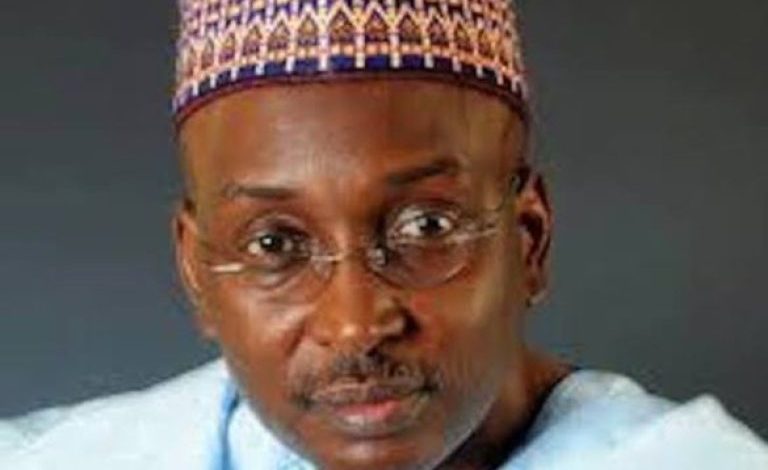

•Salihu Lukman
Former Kano State governor, Rabiu Musa Kwankwaso, has been cautioned against the plan to dump the African Democratic Congress (ADC) with Peter Obi.
Recall that Obi had yesterday stated reasons why he decided to dump the ADC, reports Daily Independent.
Warning Kwankwaso in an open letter, a chieftain of the African Democratic Congress (ADC) and former Director General of the Progressive Governors Forum (PGF), Mallam Salihu Lukman, told Kwankwaso that his attempt to dump the ADC “will simply diminish you as someone who is self-centred” and inconsiderate of the stark, harsh realities facing Nigerians.
Lukman said he was traumatised to see leaders with potentials of providing selfless services to Nigerians becoming self-absorbed in their personal ambitions.
Lukman, in his letter to Kwankwaso yesterday in Abuja, titled, “You can’t run away from yourself,” wondered how Kwankwaso, in less than six weeks of joining ADC, could be considering defecting to another party or some realignment? Asking “What has changed that wasn’t there before you joined?”
He said: “I am asking these questions, almost as an academic exercise, knowing fully well you have already made up your mind. But for the purpose of clarity, I will highlight that there is nothing in ADC today that is unique to ADC.
“Having been privileged to be at the centre of the negotiations that produced the coalition, it is important to highlight some of the factors that were considered, leading to what we have today. The first issue is that the unity of all opposition leaders under one political platform (party) is a critical success factor for electoral victory. APC won the 2023 election marginally because the opposition was divided.
“The second point was the recognition that the main opposition parties during the 2023 elections were destabilised, and they are still destabilised. PDP, LP and NNPP were all factionalised by APC-sponsored agents. Our assessment indicated the need to work towards producing an alternative platform. It was based on these assessments that we commenced consultations among opposition leaders in the country as far back as 2024.
“I will recall that around June 2024, on your initiative, I had the honour of meeting you and discussing this challenge with you. I recall that during our meeting, you fully agreed with the assessment of the danger facing opposition political parties. I can also recall that although you agree that opposition political leaders must unite, you expressed the need to slow down and wait till 2026, which may have influenced your decision on the timing when you eventually joined the coalition and ADC.
“Shortly after meeting you, I had the honour of meeting Mr Peter Obi, who also agrees that opposition leaders must unite ahead of 2027. In the case of Mr Obi, he was emphatic on the role of Alh. Atiku Abubakar in achieving such unity.
“On his insistence, I contacted Alh. Atiku Abubakar travelled to Morocco to meet him in July 2024. Like Mr Obi and yourself, Alh. Atiku Abubakar also agreed that opposition political leaders must unite ahead of 2027. Although he (Alh. Atiku) complained of how he was betrayed by many of the opposition political leaders, he affirmed his commitment to be part of such a coalition and requested a roadmap.
“Two options were considered to be central to the roadmap: register a new party or adopt any of the registered parties. Further assessment also indicated the weak potential of succeeding in getting a new party registered. Notwithstanding, however, we agreed to explore the option of registering a new party, which, by May 2025, with more than 100 applications before INEC and not much progress was being made to get them registered, it was becoming clear that the option of adopting an existing party may be the only option for opposition leaders.
“Shortly after meeting you, Mr Obi, Alh. Atiku Abubakar, without mentioning names, consulted other leaders, and a core of drivers emerged and began to hold weekly meetings. Those weekly meetings developed the framework for negotiating the coalition and implementing decisions. A major outcome of those weekly meetings was the establishment of a committee to undertake due diligence on existing parties under the leadership of Sen. Liyel Imoke. The objective is to identify potential parties among the existing registered parties to be adopted.
“Part of the terms of reference of the committee is that parties considered for adoption should not be in danger of deregistration by INEC. In other words, they must have won an election conducted by INEC in compliance with Section 78(7) of the Electoral Act 2022. In addition, such a party should not have an internal crisis or intractable litigation. In addition, the leadership of the party should subscribe to complete rebranding, which may include a change of name, a change of constitution, a change of flag, logo, slogan and a change of leadership.
“By August 2024, the committee was able to identify Accord, Action Alliance, African Democratic Congress, Action Democratic Party and Youth Party as candidates for negotiation. Social Democratic Party, although without internal crisis or intractable litigation, preliminary discussions with their leaders showed resistance to complete rebranding on account of which it was not considered.
“To activate negotiation with the candidate parties, a small technical subcommittee was setup under the leadership of Chief John Odigie-Oyegun. The subcommittee engaged leaders of the candidate parties. Supported by the work of another legal subcommittee, which reviewed the constitution of the parties, negotiation commenced. Eventually, the negotiations were narrowed to the Accord and the African Democratic Congress. Two issues guided the negotiations, which were the need to resolve subsisting leadership problems, including court cases and what to do to achieve complete rebranding.
“We were able to make progress with ADC largely because the parties in the leadership dispute agreed to go through alternative dispute resolution facilitated by INEC. INEC undertook to facilitate the ADR because one of the reasons given by the State Chairmen of the party (about 10 of them) who went to court challenging the leadership of Chief Ralph Nwosu, argued that INEC did not attend the October 2022 Convention, which returned Chief Nwosu as the National Chairman. INEC acknowledged that they were duly invited by the party to the Convention, but for some reason, they were unable to attend.
“We monitored the ADR facilitated by INEC, which took about two months to reach an agreement. Eventually, after signing the agreement, the State Chairmen who had a case in the Supreme Court requested their lawyer, Chief Mike Ozokhome, to present the agreement to the Court. Interestingly, Chief Ozokhome declined to do so on account that Chief Dumebi Kachikwu, who gave him the brief, has not approved it. All efforts to win the support of Chief Kachikwu were not successful. In the end, the State Chairmen who went to court had to disengage Chief Ozokhome and hire a new lawyer before the terms of the agreement were filed in the Supreme Court, which ended the leadership dispute in ADC.
“Once that is done, we proceeded to the next level of negotiating leadership change. The legal subcommittee was able to do a thorough evaluation of the party’s constitution. Some of the restrictive provisions were identified. One of them is that for anybody to assume a leadership position in the party, the person should be at least a member of the party for two years. The second restrictive provision is that in the event of a vacancy in a leadership position, the person to fill the vacant position should come from the same state. The National Executive Committee (NEC), under the constitution, was given the power to waive these provisions. At least two NEC meetings, which were observed by INEC, were held and passed resolutions that waived these provisions.
“By the third week of May 2025, an agreement was reached with ADC. However, at the point of adopting the ADC as the coalition party, Mal. Nasir El-Rufai, who was the last person among political opposition leaders to fully subscribe to the coalition, argued that SDP was not given the same consideration as ADC and that he believed SDP would be a better party for the coalition. Extension was given to the Sen. Liyel Imoke Committee to engage the SDP and report back. Three meetings were held with SDP, and the terms of the coalition were presented to them. They requested a short adjournment to go back and consult their organs. About two days after, a major leadership crisis swept away the National Chairman of the party, Alh. Shehu Gaban erupted. That ended our negotiation with SDP.”
According to Lukman, as someone who is eminently qualified and has what it takes to emerge as a presidential candidate, “why will you (Kwankwaso) have to go outside ADC to emerge as a presidential candidate? The same question applies to Mr Obi.”
He, however, faulted the argument associated with Peter Obi that in the event of a primary election in ADC, it will be impossible to defeat Atiku Abubakar.