

Economic war boils over as Tinubu boots out Edun, Dangiwa in shock cabinet shake-up

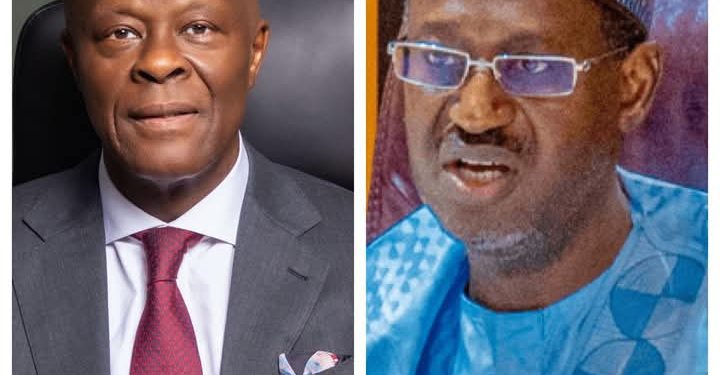

A fresh twist has emerged in the sudden sack of Minister of Finance and Coordinating Minister of the Economy, Wale Edun, as sources hint at a possible policy disagreement with President Bola Ahmed Tinubu over the true state of Nigeria’s economy.
Edun was dismissed alongside Minister of Housing and Urban Development, Umar Dangiwa, in a dramatic cabinet shake-up announced by the Secretary to the Government of the Federation, George Akume.
While the Presidency officially cited the need to “strengthen cohesion and improve delivery,” emerging indications suggest deeper issues may have influenced the decision.
Crack In The Economic Team?
Insider accounts suggest that Edun may have privately disagreed with the administration’s optimistic assessment of the economy, particularly claims that key reforms were yielding sufficient results.
According to multiple government sources, the former finance minister was said to have raised concerns about persistent inflation, weak purchasing power, and the slow pace of economic recovery, warning that conditions on the ground did not fully support claims of stability.
While there is no official confirmation of a direct confrontation, such a divergence—if established—would strike at the heart of economic policy messaging, where alignment between the President and his chief economic manager is critical.
In high-level governance, even subtle disagreements on economic direction can trigger major reshuffles, especially when public confidence is at stake.
WHY EDUN HAD TO GO
Beyond the reported disagreement, several factors likely sealed Edun’s fate:
• Pressure over harsh economic realities
Rising inflation, naira volatility, and surging living costs have intensified public frustration, putting the economic team under intense scrutiny.
• Messaging vs reality gap
The administration has maintained that reforms are on track, but widespread hardship has created a disconnect between official projections and lived experiences—possibly deepening internal tensions.
• Urgency for visible results
With patience thinning, the Presidency appears to be prioritising faster, more tangible economic outcomes—prompting a shift in leadership.
• Strategic reset
The appointment of Taiwo Oyedele signals a pivot toward a more aggressive fiscal and tax-driven approach to stabilising the economy.
DANGIWA ALSO FALLS
For Umar Dangiwa, the reasons appear more straightforward—slow progress in housing delivery and limited impact of flagship programmes amid Nigeria’s deepening housing crisis.
He is to hand over pending the confirmation of Muttaqha Rabe Darma as substantive minister.
What This Means
The sackings point to more than a routine reshuffle—they reflect a Presidency under pressure to align policy, messaging, and results.
If the reported disagreement is accurate, it underscores a critical reality:
economic policy is no longer just about strategy—but about perception, confidence, and political survival.
With more changes likely, President Tinubu appears to be sending a clear signal—loyalty to policy direction and delivery of results must go hand in hand.


