Foundation trains Ebonyi youths to promote active civic engagement before council elections
By Oswald Agwu, Abakaliki

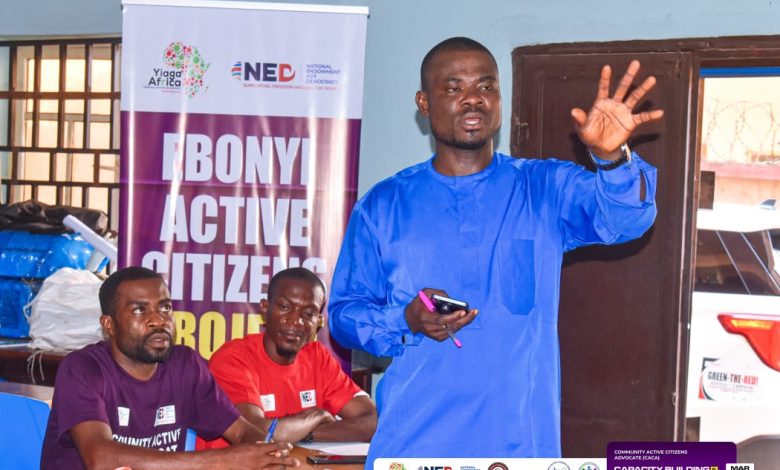

A one-day capacity-building training for 30 youths has been held in Ebonyi state with emphasis on the need for active citizenship ahead of the August local government area elections.
The training was organized by Community Outreach and Public Empowerment (COPE) Foundation, a Nongovernmental organization, under its Ebonyi Active Citizens Project (EACP) with support from Yiaga Africa and the National Endowment for Democracy. It is aimed to promote civic awareness, encourage participation, and support inclusive governance.
COPE Foundation Executive Director Azubuike Mgbebu said the project ultimately aims at increasing civic awareness among youths and women and building a more responsible and accountable governance.
He explained that the Advocates, as part of the project design, would be stepping down the training in their various communities with each targeting at least, 10 trainees, forming a network to advance the goals of the project.
He admonished the advocates to exhibit high ethical values and respect the rules of community engagement as they proceed to train others and execute the project in their various Communities.
Mgbebu further explained that COPE Foundation is a Nongovernmental, non profit organization focused on supporting youth, women leadership development and community development, among other interventions.
The lead facilitator at the event, Chief Oliver Chima Aja, Executive Director of Development and Integrity Intervention Goal Foundation, attributed leadership failures in Nigeria to citizens’ apathy, saying, “Democracy works best when citizens are actively involved in decision making.”
He enjoined participants to always get interested in, as well as work to influence other members to show interest in social and political affairs of their communities as well as demand accountability from their leaders.
Participants Emmanuel Nwojiji from Abakaliki LGA and Calista Igboji from Ikwo, in separate interviews, praised the training, pledging to influence others and drive change in their communities.
Participants also received certificates, field guides, and tool kits, and formulated community action plans at the training.